
There is nothing more frustrating for a pool owner than adding shock after shock, only to see the water remain cloudy, green, or murky. You test the water, and the readings are confusing—sometimes showing high chlorine levels, yet algae continues to bloom.
This baffling phenomenon is often caused by a chemical condition known as chlorine lock. Essentially, your chlorine has been rendered ineffective by an imbalance in stabilizer levels, specifically cyanuric acid (CYA). When CYA levels get too high, they “lock” the chlorine, preventing it from sanitizing the water.
Instead of killing bacteria and algae, the sanitizer floats uselessly in the pool. If you are struggling with stubborn water problems, learning how to break chlorine lock is the critical skill you need to master.
This guide will walk you through the science of why this happens and provide a foolproof, step-by-step method to fix it, saving you money on chemicals and getting your pool crystal clear again.
Chlorine lock can be a frustrating problem for pool owners, leading to cloudy water and ineffective sanitization despite regular maintenance. Understanding the root causes of this issue is essential for keeping your pool in perfect condition.
By addressing chlorine lock properly, you can ensure a safer, healthier swimming environment for everyone and avoid unnecessary expenses. With the right approach, achieving a sparkling, inviting pool is entirely within your grasp.
Why Does Chlorine Lock Happen?
Chlorine lock occurs when there is an imbalance of chemicals in the pool, particularly when the stabilizer, cyanuric acid, is too high. Cyanuric acid is essential for protecting chlorine from being broken down by the sun’s ultraviolet rays, but excessive levels can have the opposite effect.
When too much cyanuric acid is present, it binds with the chlorine to the point where the chlorine becomes inactive and unable to sanitize the water effectively.
Other contributing factors may include an overuse of stabilized chlorine products or improper water chemistry management. Understanding why chlorine lock happens is the first step in tackling this issue and restoring balance to your pool.
Tools and Materials
To address chlorine lock and restore your pool’s chemical balance, you’ll need the following tools and materials:
- Water Testing Kit: Essential for accurately measuring chlorine levels, cyanuric acid levels, and overall water chemistry.
- Chlorine Neutralizer: Used to lower high chlorine levels if necessary.
- Pool Shock: A powerful treatment to break down contaminants and help reset the pool’s chemistry.
- Fresh Water Source: Adding fresh water can help dilute high cyanuric acid levels and reset the pool’s balance.
- Pool Brush and Skimmer: For regular cleaning and removing debris that may affect water chemistry.
- Measuring Cups or Scoops (if required): For precise handling of pool chemicals.
Having these tools and materials on hand ensures you are prepared to effectively combat chlorine lock and maintain a clean, sanitized pool.
Step-by-Step Guide: How to Break Chlorine Lock
Step 1: Understand the Role of Cyanuric Acid
Before you can fix the problem, you must understand the chemistry behind it. Cyanuric acid, often called stabilizer or conditioner, acts like sunscreen for your chlorine. Without it, the sun’s ultraviolet rays would degrade the sanitizer in a matter of hours. However, unlike water that evaporates, cyanuric acid stays in the pool indefinitely.
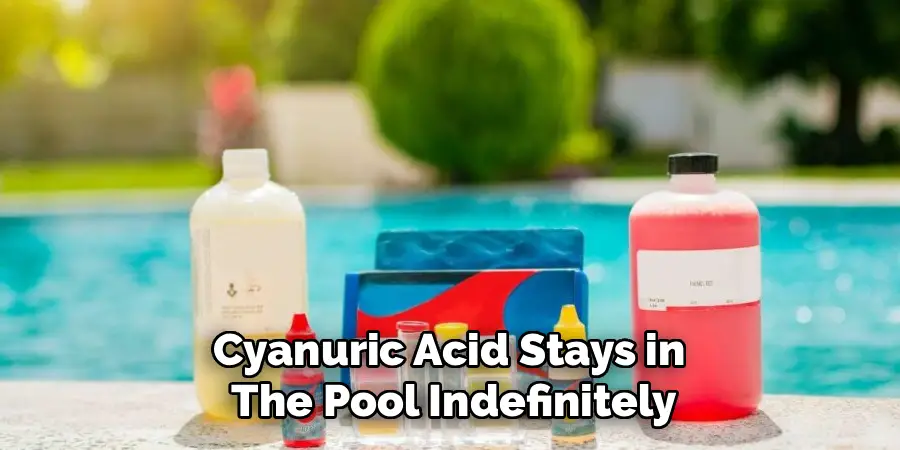
It accumulates over time, especially if you use stabilized chlorine pucks or dichlor shock regularly. When the concentration of CYA exceeds 50 to 100 parts per million (ppm), it begins to over-stabilize the water.
At this point, the chlorine binds so tightly to the CYA that it cannot release to attack contaminants, creating the “lock.” Recognizing this relationship is the foundation of solving the issue permanently.
Step 2: Test Your Water for Cyanuric Acid Levels
The first actionable step is to get an accurate reading of your pool’s chemistry. While standard test strips can give you a rough idea, they are notoriously difficult to read for precise high-level measurements. For a diagnosis of chlorine lock, take a water sample to a local pool store for professional testing or use a high-quality liquid test kit at home.
You are specifically looking for the cyanuric acid (CYA) reading. Ideally, this number should be between 30 and 50 ppm.
If your test results show CYA levels soaring above 80 or 100 ppm, you have confirmed the diagnosis. Knowing the exact number is crucial because it dictates how much water you will need to replace in the subsequent steps.
Step 3: Stop Adding Stabilized Chlorine Immediately
Once you have confirmed high CYA levels, you must immediately stop adding any source of stabilized chlorine to the pool. This includes the most common 3-inch trich’or tablets that float in your skimmer or chlorinator, as well as dichlor shock powder.
Every single one of these tablets adds more cyanuric acid to the water along with the chlorine. Continuing to use them is like trying to put out a fire with gasoline; you are only deepening the chemical imbalance.
Switch temporarily to unstabilized forms of sanitizer, such as liquid chlorine (sodium hypochlorite) or cal-hypo shock, until the situation is resolved. This prevents the problem from getting worse while you prepare to fix the root cause.

Step 4: Partial Draining
The unfortunate reality of cyanuric acid is that it does not break down naturally, nor can it be removed effectively by chemical additives. The only reliable way to lower CYA levels is by dilution. You need to drain a portion of your pool water and replace it with fresh water.
Based on your test results from Step 2, determine how much water to remove. If your CYA is double the recommended limit (e.g., 100 ppm instead of 50 ppm), you will generally need to replace about half of the pool water.
Use a submersible pump to drain the water to the waste line, being careful not to drain below the shallow end floor in vinyl liner pools to prevent liner shifting.
Step 5: Refill the Pool with Fresh Water
After draining the calculated amount of water, begin refilling the pool immediately with a garden hose. Use fresh tap water, which contains zero cyanuric acid. As the fresh water mixes with the remaining pool water, the overall concentration of CYA will decrease significantly.
It is important to monitor the filling process closely to ensure the pool does not overflow. This process might take several hours or even a full day depending on your water pressure and pool size.
While refilling, you can technically start the circulation system once the water level is back above the skimmer intake to help mix the new and old water together faster.
Step 6: Retest and Verify CYA Levels
Once the pool is filled back to its normal operating level and the pump has run for at least 4 to 6 hours to circulate the water thoroughly, it is time to test again. You need to verify that your partial drain was successful in bringing the cyanuric acid levels down to the manageable range of 30 to 50 ppm.
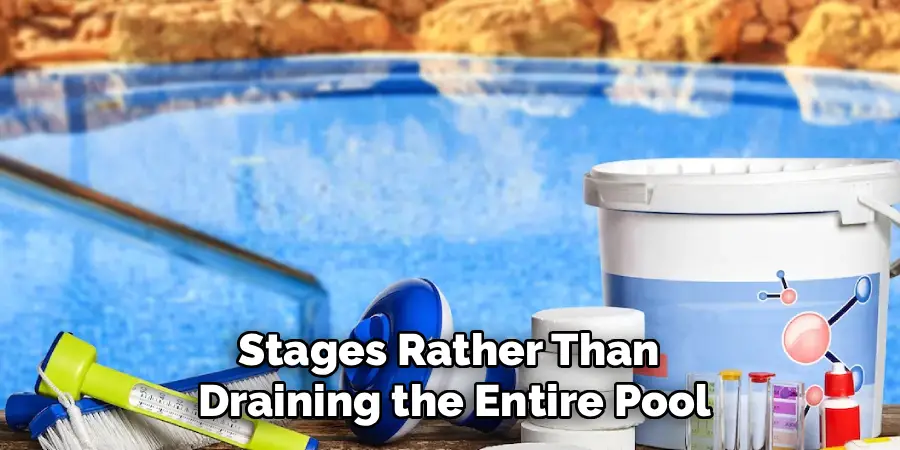
If the reading is still stubbornly high—say, above 70 ppm—you may need to repeat the draining and refilling process one more time. It is better to do this in stages rather than draining the entire pool at once, which poses structural risks to the pool shell. Do not proceed to the shocking phase until the CYA is confirmed to be in the safe zone.
Step 7: Balance pH and Alkalinity
With the stabilizer levels finally corrected, you must balance the rest of the water chemistry before attacking the chlorine demand. Fresh water can alter your pH and total alkalinity significantly. Test the water and adjust the total alkalinity first, aiming for a range of 80 to 120 ppm.
Once alkalinity is set, adjust the pH to between 7.2 and 7.4. Keeping the pH on the lower end of the acceptable range makes your chlorine more effective during the upcoming shock treatment.
If the pH is too high, the shock will be sluggish and less potent against algae and bacteria. Proper balance ensures that the chemicals you are about to add work at maximum efficiency.
Step 8: Calculate the Breakpoint
Now comes the critical math portion of the process. To fully overcome the remaining demand and burn off the chloramines (combined chlorine) that have built up, you need to reach “breakpoint chlorination.” This typically means raising your free chlorine level to 10 times the amount of combined chlorine in the pool, or to a high shock level relative to your CYA.
Since you have lowered your CYA, this is now achievable. Use a pool calculator app or consult a dosage chart to determine exactly how much liquid chlorine or cal-hypo shock is needed to hit a target of roughly 20 to 30 ppm of free chlorine. Precision is key here; under-dosing will fail to break the lock, while overdosing is wasteful.
Step 9: Shock the Pool
Execute the breakpoint chlorination by adding the calculated amount of shock to the pool. It is best to do this at dusk or in the evening to prevent the sun from burning off the chlorine before it can do its job. If you are using granular shock, dissolve it in a bucket of water first (unless instructions say otherwise) to protect your pool surface, then pour it around the perimeter. If using liquid chlorine, pour it slowly in front of a return jet for fast dispersion. Run the pool pump continuously for 24 hours. The water may turn a cloudy blue-gray color initially as the chlorine attacks the organic contaminants and dead algae begins to clear up.
Step 10: Brush, Filter, and Maintain
The final step involves physical labor to help the chemicals work. While the shock is circulating, brush the walls and floor of the pool vigorously to expose any hiding algae or bacteria to the high-chlorine water. Keep an eye on your filter pressure gauge; as the dead algae is filtered out, the pressure will rise, and you will need to backwash or clean the filter cartridge frequently. Continue to test the free chlorine levels. If the level drops significantly overnight, it means the chlorine is still fighting contaminants, and you may need to shock again. Maintain high chlorine levels until the water is crystal clear and you can hold a steady chlorine reading overnight.
Common Pool Care Myths
When it comes to maintaining a swimming pool, there are numerous myths that can lead to ineffective or even harmful practices. One common misconception is that chlorine has a strong chemical smell, but in reality, a well-maintained pool with the proper chlorine balance should not have a noticeable odor. A strong smell often indicates a buildup of chloramines, which results from inadequate chlorine levels.
Another popular myth is that shocking the pool frequently is necessary to keep it clean. While shocking the pool is an important process for removing contaminants, overdoing it can cause irritation to swimmers and unnecessarily waste chemicals. Similarly, many believe that a pool’s water clarity is an indicator of cleanliness. However, even crystal-clear water can harbor harmful bacteria or imbalanced chemicals.
Lastly, some insist that adding more chemicals is the best solution for any pool problem. While chemicals play a vital role, proper filtration, consistent maintenance, and regular cleaning are just as critical to maintaining a healthy pool environment. Understanding these myths can help pool owners manage their pools more effectively and avoid common pitfalls.
Frequently Asked Questions
What Is the Difference Between Combined Chlorine and Free Chlorine?
Understanding these two terms is vital for pool care.
- Free Chlorine: This is the active sanitizer available to kill new bacteria and algae. It is the “good” chlorine you want to see on your test strip.
- Combined Chlorine: This is chlorine that has already done its job and bonded with contaminants like ammonia or nitrogen. It is ineffective as a sanitizer and is responsible for the strong “chlorine smell” and eye irritation. Breaking chlorine lock eliminates this “bad” chlorine.
Can I Use Chemicals to Lower Cyanuric Acid?
There are chemical products on the market labeled as cyanuric acid reducers, but most pool professionals advise against them. They are typically very expensive, require complex application procedures, and often yield inconsistent or minimal results. In almost every scenario, partially draining and refilling the pool with fresh water is the faster, more reliable, and significantly cheaper method for correcting high stabilizer levels.
How Can I Prevent Chlorine Lock from Coming Back?
The best prevention is to manage your chlorine sources. If you rely heavily on stabilized chlorine tablets (trichlor) or stabilized shock (dichlor), you are constantly adding cyanuric acid to the water. To prevent future lock:
- Switch to unstabilized sanitizer sources like liquid chlorine or cal-hypo for your weekly shock treatments.
- Rotate between tablets and liquid chlorine.
- Test your CYA levels monthly so you can catch a rising trend before it becomes a problem.
Is It Safe to Swim in a Pool with Chlorine Lock?
It is generally not recommended. When a pool is chlorine locked, the sanitizer is ineffective, meaning the water is not being properly cleaned. Bacteria, viruses, and algae can grow unchecked, posing health risks to swimmers. Additionally, the high levels of combined chlorine that accompany this condition can cause skin irritation, red eyes, and respiratory issues. It is best to fix the chemistry before allowing anyone back in the water.
Why Is My Pool Green Even Though Chlorine is High?
This is the classic symptom of chlorine lock or high phosphates. Even if your test kit shows high “total chlorine,” your “free chlorine” might be zero because it is trapped by the excess cyanuric acid. Alternatively, the chlorine reading might be accurate, but the stabilizer is so high that the chlorine’s kill time is too slow to keep up with the algae bloom. This disconnect between high test readings and green water is your red flag to check CYA levels immediately.
Conclusion
Dealing with a pool that won’t clear up is stressful, but understanding the chemistry behind chlorine lock turns a mystery into a manageable problem. It is not about adding more and more chemicals blindly; it is about restoring the delicate balance between your sanitizer and its stabilizer. By testing accurately, diluting the water to lower cyanuric acid, and then hitting the pool with the correct dosage of unstabilized shock, you can reset your pool’s health. This process requires patience and a bit of physical work, but the reward is a safe, sparkling swimming environment. Now that you have a comprehensive

About
Outdoor Fixes is a distinguished figure in the world of Diy design, with a decade of expertise creating innovative and sustainable Diy solutions.
His professional focus lies in merging traditional craftsmanship with modern manufacturing techniques,
fostering designs that are both practical and environmentally conscious. As the author of diy,
outdoorfixes delves into the art and science of outdoorfixes-making, inspiring artisans and industry professionals alike.
Education RMIT University
(Melbourne, Australia) Associate Degree in Design (Outdoor Fixes) Focus on sustainable design, industry-driven projects,
and practical craftsmanship. Gained hands-on experience with traditional and digital manufacturing tools, such as CAD and CNC software.
Nottingham Trent University
(United Kingdom) Bachelor’s in outdoorfixes.com and Product Design (Honors) Specialized in product design with a focus on blending creativity with production
techniques. Participated in industry projects, working with companies like John Lewis and Vitsoe to gain real-world insights.
Publications and Impact
In diy, Outdoor Fixes his insights on indoor design processes, materials, and strategies for efficient production.
His writing bridges the gap between artisan knowledge and modern industry needs, making it a must-read for both budding designers and seasoned professionals.