
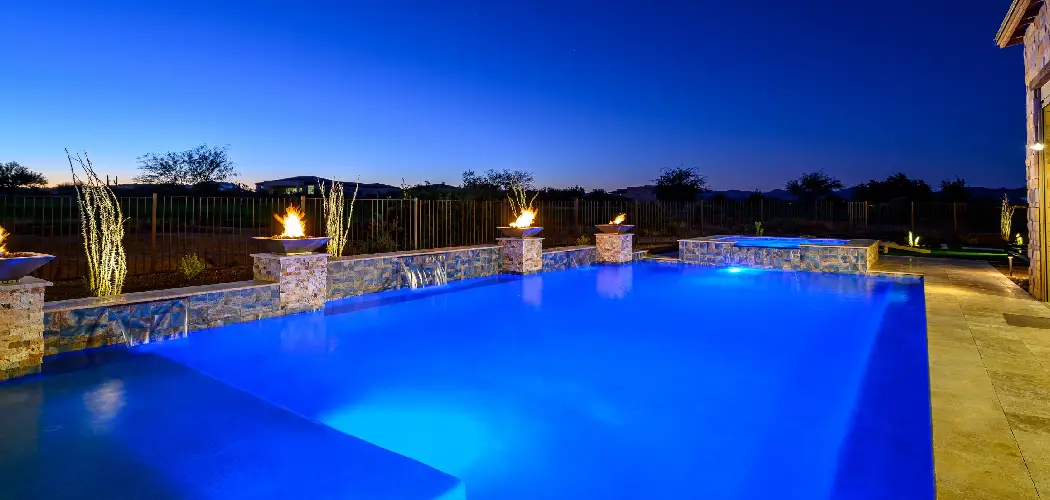
Modern color-changing pool lights can transform your backyard into a stunning oasis, but when they fall out of sync, with one light showing blue while the other is red, it can be incredibly frustrating. This common issue can disrupt the beautiful ambiance you want for your evening swims. Many pool owners assume this requires a costly service call, but often, the solution is surprisingly simple. Most lighting systems are designed to be reset with a specific sequence of power cycling.
This guide is designed for pool owners of all experience levels and will provide clear, safe instructions on how to reset pool lights, getting them back in perfect harmony without needing to call a professional.
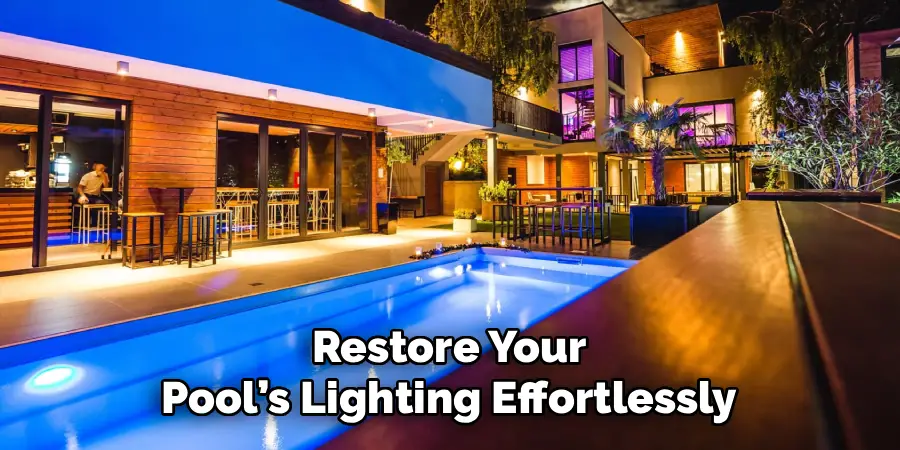
When your pool lights stop functioning properly, it can be both frustrating and inconvenient, especially if you rely on them to create a welcoming atmosphere during evening hours. However, before you worry about expensive repairs or replacements, it’s important to know that many lighting systems can be reset with just a few simple steps. By understanding the basics of how these systems work and following a straightforward process, you can often resolve the problem yourself and restore your pool’s lighting effortlessly.
Understanding Pool Lighting Systems
When it comes to troubleshooting pool lighting, it’s important to first understand the different components that make up a typical pool lighting system.
The bulbs used for pool lighting are typically either halogen or LED. Halogen bulbs produce a warm white light and are known for their brightness and durability. However, they also tend to have a shorter lifespan compared to LED bulbs.
LED bulbs, on the other hand, have a longer lifespan and are more energy-efficient, making them popular choices for pool lighting. They also come in various colors and can be programmed to change colors or settings through a remote control or automation system.
Tools and Materials
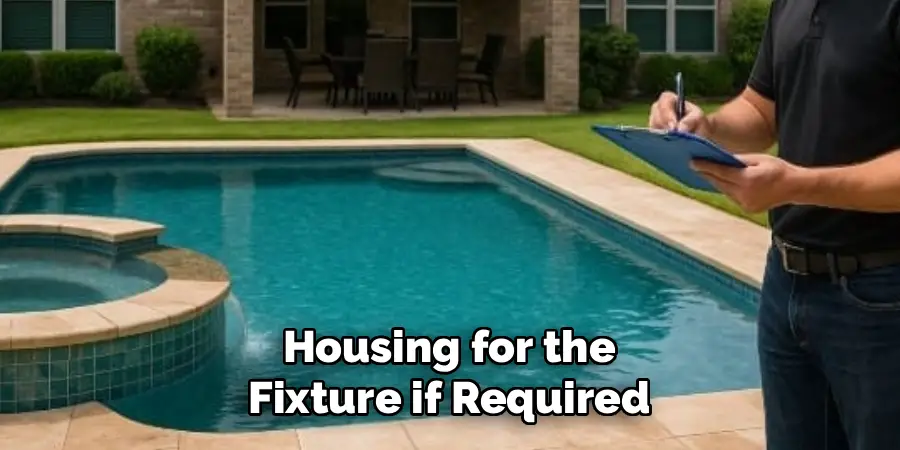
When installing or replacing pool lighting, having the right tools and materials on hand is essential for a smooth process. Key tools include a screwdriver, voltage tester, silicone sealant, and wire strippers. It’s also helpful to have a replacement gasket handy to ensure a watertight seal around the light fixture. For materials, you’ll need the appropriate light bulb (halogen or LED), a niche or housing for the fixture if required, and waterproof connectors. Always ensure that the tools and materials you use are compatible with the specific lighting system in your pool for optimal safety and performance.
Step-by-Step Guide on How to Reset Pool Lights
Step 1: Prioritize Safety by Turning Off All Power
Before you begin any work related to your pool’s electrical system, your absolute first priority must be safety. Water and electricity are a dangerous combination. Go to your home’s main circuit breaker panel, which is typically located in a garage, basement, or utility closet. Locate the specific circuit breaker that controls your pool lights and switch it to the “OFF” position. If your pool equipment is on a subpanel near the pump and filter, you should turn off the breaker there as well. This crucial first step ensures there is no electrical current running to the lights, protecting you from the risk of electric shock.
Step 2: Identify Your Light Brand
Different brands of pool lights, such as Pentair, Jandy, or Hayward, have slightly different reset procedures. Knowing the manufacturer of your lighting system will make the process much smoother. You can often find the brand name printed on the light’s housing (visible from inside the pool), on the remote control, or on the main control panel for your pool automation system. If you have the original owner’s manual for your pool equipment, it will contain this information. Identifying the brand helps you understand the specific timing and sequence needed, as one brand might require a 10-second off-cycle while another needs 15 seconds.
Step 3: Understand the Power-Cycling Method

The most common method for resetting pool lights is known as power-cycling. This technique involves turning the lights off and on in a quick, timed sequence to trigger the internal memory to reset to its factory default settings. It does not require any special tools, just access to the light switch or circuit breaker. The core concept is that a rapid interruption of power signals the lights to recalibrate and synchronize with each other. This is the same principle used to reset many household electronics. The key to success is following the precise timing required by your specific light model.
Step 4: Perform the Initial Power-Cycle
With the power off at the breaker, you are ready to begin the reset sequence. For most standard LED color lights, the process starts by leaving the power off for about 30 seconds. This duration ensures that any residual power in the system has fully dissipated, allowing the light’s internal computer chip to perform a “hard” reboot. After waiting for the full 30 seconds, flip the circuit breaker back to the “ON” position for just a moment—no more than one second—and then immediately switch it back to the “OFF” position. This quick flash of power is the first signal in the reset command sequence.
Step 5: Execute the Main Reset Sequence
This step is the most critical for a successful reset. After the initial quick flash of power, you need to follow up with a specific timed sequence. A widely used pattern involves turning the power OFF for about 3 to 5 seconds, then ON for 3 to 5 seconds, and repeating this cycle three times. Think of it as a rhythmic pulse: OFF (wait 4 seconds), ON (wait 4 seconds), OFF (wait 4 seconds), ON (wait 4 seconds), OFF (wait 4 seconds), ON. The precise timing is important, so using a watch or the stopwatch on your phone can be very helpful to maintain a consistent count during the sequence.
Step 6: Finalize the Reset by Leaving the Power On
After you have completed the on-and-off power-cycling sequence, the final step is to flip the breaker back to the “ON” position and leave it on. The lights should now turn on and all be synchronized to their default color mode, which is often a bright white or a slow color-changing cycle. At this point, you can observe the lights to confirm that they are all displaying the same color and changing in unison. If the lights are still out of sync, do not be discouraged. It may mean the timing was slightly off, and you may need to repeat the process from the beginning.
Step 7: Test the Light Functions with Your Controller
Once the lights are synchronized, it is time to test them using your normal control method. This could be a dedicated light switch, a remote control, or your pool’s automation system panel. Cycle through the different color options and light show modes to ensure everything is working correctly. As you switch from a solid blue to a solid green, for example, all the lights in the pool should change simultaneously. This confirms that the reset was successful and the lights have re-established proper communication and synchronization. Now you can enjoy all the custom light shows as intended.
Step 8: What to Do If the Reset Fails
If you have tried the power-cycling method two or three times and the lights remain out of sync, there might be another issue at play. First, double-check the specific reset procedure for your brand of lights online, as the timing can vary. If the procedure is correct, the problem could be related to a faulty GFCI (Ground Fault Circuit Interrupter) outlet, a low voltage issue from the transformer, or a problem with the light’s internal board itself. In these cases, troubleshooting becomes more complex and may require a multimeter to test electrical components.
Step 9: Check the GFCI Outlet
Many pool light systems are connected to a GFCI outlet for safety. This outlet is designed to trip and cut power if it detects an imbalance in the electrical current, which can happen with age or exposure to moisture. Locate the GFCI outlet that your pool lights are plugged into (it is usually near the equipment pad) and press the “RESET” button firmly. Sometimes, a “soft trip” can cause intermittent power issues that make the lights fall out of sync. Resetting the GFCI ensures that a stable, consistent flow of power is being delivered to the lights’ transformer.
Step 10: When to Call a Professional
If you have followed all the steps, including checking the GFCI, and you are still unable to get your lights to sync, it is time to call a qualified pool service professional or a licensed electrician. Continuing to troubleshoot complex electrical issues without the proper knowledge and tools can be dangerous and could cause further damage to your equipment. A professional can diagnose underlying problems like a failing transformer, a damaged wire, or a defective light fixture, and they can perform the necessary repairs safely and efficiently.
Maintenance Tips for Longevity
To ensure the longevity of your pool lighting system and avoid unexpected issues, regular maintenance is key. Start by periodically inspecting the lights for visible wear, damage, or moisture buildup inside the fixtures. Clean the light lenses to remove dirt, algae, or debris that can diminish brightness over time. Additionally, check the wiring and connections for signs of corrosion or loose fittings, as these can lead to electrical problems if left unaddressed. Always ensure the pool’s water chemistry is balanced, as improper pH levels or excess chlorine can damage the lights over time. Lastly, schedule professional inspections annually to address any potential issues early and to keep your lighting system in optimal condition.
Pool Lighting Benefits
Pool lighting offers numerous benefits, enhancing both the functionality and aesthetics of your pool area. It allows for safe swimming after dark by improving visibility and minimizing potential hazards. Additionally, pool lighting creates a vibrant and inviting atmosphere, perfect for evening gatherings or relaxation. With various options available, such as color-changing LEDs, it also offers the flexibility to customize the ambiance to suit different occasions, adding value and enjoyment to your outdoor space.
A well-designed outdoor space can transform any property into a haven of comfort and elegance. By incorporating thoughtful features and enhancements, you can create an environment that balances functionality with aesthetic appeal. Whether for entertaining guests, enjoying family time, or simply unwinding after a busy day, a carefully planned outdoor area adds significant value and enjoyment to your home.
Frequently Asked Questions

Why Do My Pool Lights Get Out of Sync?
Pool lights usually get out of sync due to a brief power interruption. A quick flicker in your home’s electricity, someone accidentally flipping the light switch off and on too quickly, or a brownout can be enough to disrupt the timing of one light but not the other. This causes their internal memory to be on different steps of the color-changing sequence.
How Often Should I Have to Reset My Pool Lights?
You should not have to reset your pool lights frequently. In a properly functioning system, a reset is typically only needed after a power outage or if the switch is toggled incorrectly. If you find yourself needing to reset your lights every week, it could be a sign of an underlying electrical problem, such as an unstable power supply from the transformer or a faulty GFCI outlet that needs to be addressed.
Is It Safe for Me to Reset My Pool Lights Myself?
Yes, it is generally safe as long as you are only interacting with the switch or circuit breaker. This process does not require you to handle any wiring or open any electrical components. The most important safety rule is to ensure you are completely dry and not standing in water when you are operating the circuit breaker panel.
Can a Bad Bulb Cause Lights to Be Out of Sync?
A single bad bulb will typically just not turn on at all, rather than causing a synchronization issue with other lights in the pool. However, if the electronics within an older LED fixture are beginning to fail, it could potentially cause erratic behavior. If only one light is consistently failing to respond to a reset, that specific fixture may need to be replaced.
What Is the Difference Between Resetting and Reprogramming?
Resetting is the process of returning the lights to their factory default settings to get them back in sync. It is done by power-cycling. Reprogramming, on the other hand, involves setting custom light shows or favorite colors, which is usually done through your pool’s automation control panel or a dedicated remote control once the lights are properly synchronized.
Conclusion
A vibrant, synchronized light show can be the highlight of any swimming pool, and keeping it that way does not have to be a complicated task. For most pool owners, the solution to out-of-sync lights is a simple, methodical power-cycling sequence that costs nothing but a few minutes of your time. By carefully following the steps of turning the power off, identifying your brand, and performing the timed on-and-off sequence, you can restore harmony to your pool’s lighting system. Remember to always prioritize safety when working with electrical components. Now that you know how to reset pool lights, you can confidently tackle this common issue and get back to enjoying your beautiful backyard oasis.
In conclusion, having a properly functioning pool lighting system is essential for creating a safe and enjoyable swimming experience. However, like any electrical component, pool lights can sometimes malfunction and require resetting. It is important to follow the steps outlined in this guide to safely and effectively reset your pool lights. Remember to always prioritize safety when working with electricity and if you are unsure, seek professional assistance. With these tips in mind, you can confidently maintain your pool’s lighting system and continue enjoying your backyard oasis. So next time you notice your pool lights acting up, don’t panic! Instead, take a deep breath and follow these simple steps to reset them and get back to relaxing in your beautiful

About
Outdoor Fixes is a distinguished figure in the world of Diy design, with a decade of expertise creating innovative and sustainable Diy solutions.
His professional focus lies in merging traditional craftsmanship with modern manufacturing techniques,
fostering designs that are both practical and environmentally conscious. As the author of diy,
outdoorfixes delves into the art and science of outdoorfixes-making, inspiring artisans and industry professionals alike.
Education RMIT University
(Melbourne, Australia) Associate Degree in Design (Outdoor Fixes) Focus on sustainable design, industry-driven projects,
and practical craftsmanship. Gained hands-on experience with traditional and digital manufacturing tools, such as CAD and CNC software.
Nottingham Trent University
(United Kingdom) Bachelor’s in outdoorfixes.com and Product Design (Honors) Specialized in product design with a focus on blending creativity with production
techniques. Participated in industry projects, working with companies like John Lewis and Vitsoe to gain real-world insights.
Publications and Impact
In diy, Outdoor Fixes his insights on indoor design processes, materials, and strategies for efficient production.
His writing bridges the gap between artisan knowledge and modern industry needs, making it a must-read for both budding designers and seasoned professionals.