

A perfectly manicured lawn edge or a clean garden bed can be a source of great pride, but keeping weeds at bay often feels like a constant battle. The go-to tool for many is the noisy, gas-guzzling string trimmer, or weed eater. However, these machines aren’t always the best solution.
They can be loud, heavy, require fuel and maintenance, and can easily damage tree bark or delicate garden plants. What do you do when the trimmer is broken, out of fuel, or you simply prefer a quieter, more eco-friendly approach? Fortunately, gardeners have been managing landscapes for centuries with effective manual tools.
This guide will show you precisely how to cut weeds without a weed eater, exploring a variety of powerful and precise alternatives that offer control, quiet, and a great connection to your garden.
Weeds can become an overwhelming challenge in any garden, quickly taking over and competing with your plants for nutrients, water, and sunlight. While weed eaters may offer a quick solution, they aren’t always the most practical or sustainable option.
Instead, using traditional tools and techniques can not only help you keep weeds in check but also give you a sense of satisfaction and harmony with your outdoor space. This approach allows you to work at your own pace, with precision and care, while reducing noise pollution and avoiding the reliance on fuel-powered machinery.
Cutting Weeds Without a Weed Eater
When it comes to maintaining your lawn or garden, cutting weeds is an essential task. It not only keeps your outdoor space looking tidy and well-maintained but also promotes healthy growth of your desired plants. However, using a weed eater can be loud, messy, and expensive. Moreover, they require constant maintenance and can harm the delicate plants in your garden.
Gardeners have been managing weeds long before the invention of weed eaters. In fact, manual tools are still widely used by many professionals and homeowners due to their effectiveness and precision.
Step-by-Step Guide on How to Cut Weeds Without a Weed Eater
Step 1: Use a Grass Scythe for Large Areas
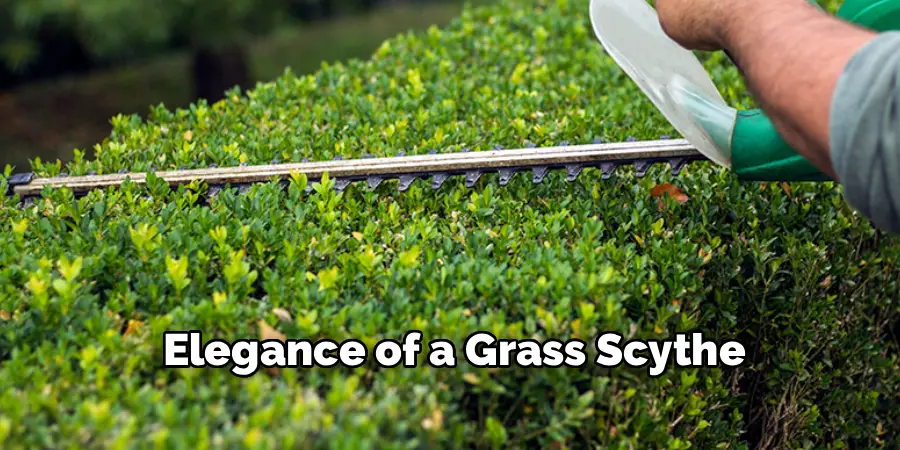
For tackling large areas of overgrown grass and tall weeds, few tools match the efficiency and elegance of a grass scythe. Unlike a weed eater, a scythe cuts with a clean slicing motion rather than tearing, which is healthier for the grass. To use one effectively, stand with your feet shoulder-width apart and hold the scythe with a relaxed grip.
The motion is a smooth, sweeping arc from the right to the left, using your whole body, not just your arms. The blade should glide just above the ground. Keeping the blade sharp is essential for good performance. A scythe allows you to clear significant ground quickly and quietly, making it an excellent alternative for managing meadows or large, unkempt sections of your property.
Step 2: Employ a Grass Whip for Precision Slicing
A grass whip, sometimes called a swing blade, is a lighter, more targeted tool than a scythe. It features a long handle and a double-edged serrated blade, making it perfect for clearing thick weeds in ditches, around fence lines, or on steep banks where a mower can’t go.
The technique involves a vigorous, level swinging motion, similar to a golf swing. You use the tool’s momentum to slice through tough vegetation at its base. A grass whip offers more control than a power trimmer, reducing the risk of accidentally girdling a tree or cutting down your prized perennials. It provides an excellent upper-body workout and is a fantastic method for anyone learning how to cut weeds without a weed eater.
Step 3: Use Edging Shears
When you need a perfectly crisp, clean edge along a driveway, sidewalk, or garden bed, nothing beats a pair of long-handled edging shears. These manual tools look like scissors with long handles and operate with a simple snipping action. Stand over the edge you wish to trim and use the shears to make clean, vertical cuts.
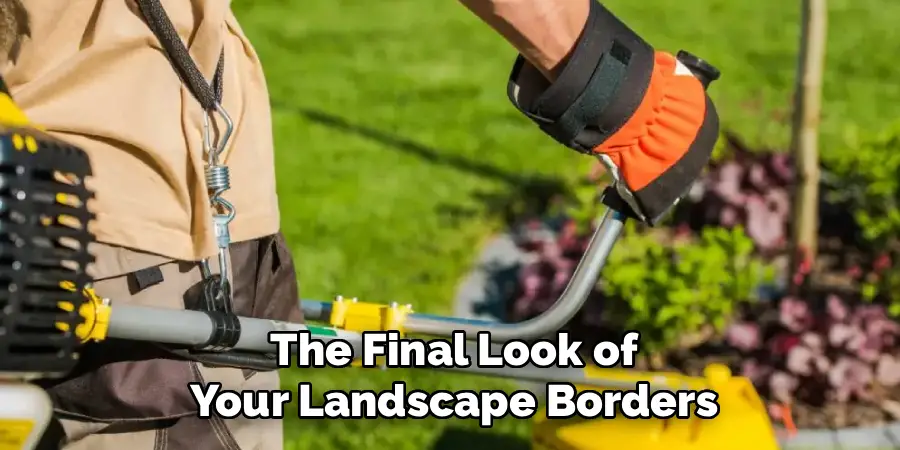
They provide unparalleled precision, allowing you to create sharp lines that a string trimmer often struggles to achieve without scalping the lawn. While more time-consuming than a power tool for long stretches, the flawless result is often well worth the effort. They are quiet, require no fuel, and give you complete control over the final look of your landscape borders.
Step 4: Rely on Hand Shears for Detailed Work
For detailed trimming around delicate flower heads, tree trunks, or intricate stonework, a simple pair of hand shears or grass clippers is indispensable. These small, one-handed tools allow you to get up close and personal with your work, snipping individual weeds or blades of grass with surgical precision. Kneeling down with a pair of hand shears lets you work carefully around obstacles without any risk of damaging valuable plants or scraping hardscaping.
They are perfect for those final finishing touches that elevate a garden from good to great. This meticulous approach is an essential part of the skill set for anyone who wants to know how to cut weeds without a weed eater.
Step 5: Utilize a Hoe for Garden Beds
A hoe is one of the oldest and most effective weeding tools for use within garden beds. For cutting weeds, a sharp scuffle hoe (also known as a stirrup or action hoe) is particularly effective. This tool is designed to be used with a push-pull motion, where the blade slides just under the soil surface, slicing weeds off at the root. This method is fast, efficient, and minimally disruptive to your garden soil.
It is best used on young weeds before they have a chance to develop deep root systems. Regular hoeing not only eliminates weeds but also aerates the top layer of soil, helping to prevent new weed seeds from germinating.
Step 6: Pull Weeds by Hand After a Rain
Sometimes, the best tools are the ones you were born with. Hand-pulling weeds, especially after a good rain, is an incredibly effective method. When the soil is moist and soft, even deep-rooted perennial weeds like dandelions and thistles will slide out with much less resistance.
Grasp the weed firmly at its base, as close to the soil line as possible, and pull with a steady, upward motion. This ensures you remove the entire root system, preventing the weed from growing back. While not a “cutting” method, it is often the most permanent solution and a critical part of a comprehensive weed management strategy that doesn’t rely on power tools.
Step 7: Prevent Future Growth with Mulch
The most effective way to deal with weeds is to stop them from growing in the first place. After you have cut or pulled existing weeds, apply a thick layer of organic mulch, such as wood chips, straw, or shredded leaves, over the cleared area. A two- to three-inch layer of mulch acts as a physical barrier, blocking sunlight and preventing weed seeds from sprouting. As the mulch breaks down over time, it also enriches the soil.
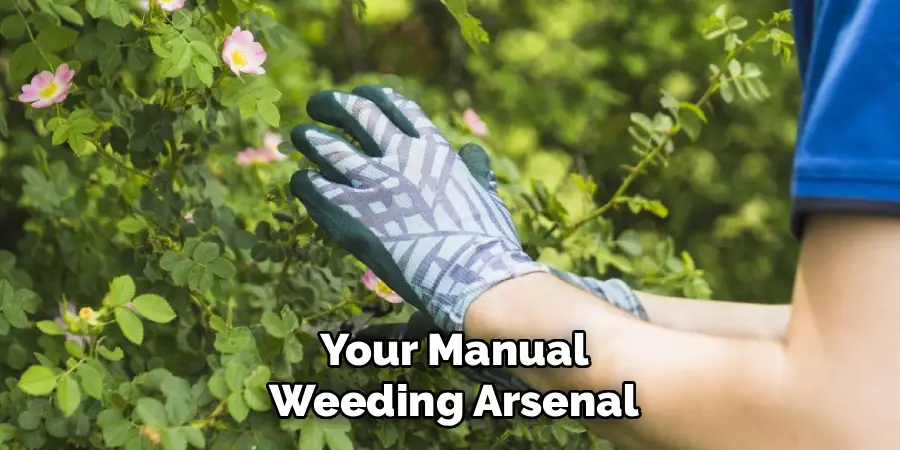
This proactive, preventative step drastically reduces the amount of time you will need to spend cutting or pulling weeds in the future, making it the smartest long-term strategy in your manual weeding arsenal.
Frequently Asked Questions
What Is the Fastest Way to Manually Cut Weeds?
For large, overgrown areas, a scythe is by far the fastest manual tool. Once you get the rhythmic swinging motion down, you can clear a significant amount of tall grass and weeds in a surprisingly short amount of time. For smaller, more defined areas like fence lines, a grass whip offers a good balance of speed and precision.
How Do I Get Rid of Weeds Without Damaging My Lawn?
Precision tools are key. Edging shears allow you to create clean lines along walkways without scalping the turf. For weeds within the lawn itself, a specialized stand-up weeding tool that pulls the root out is ideal, as it creates a minimal hole that the surrounding grass will quickly fill. Hand-pulling after rain is also very effective and targeted.
Is It Better to Pull Weeds or Cut Them?
It depends on the weed.
- Pulling: This is always the best option for weeds with a single, deep taproot (like dandelions) or perennials, as it removes the entire plant and prevents regrowth.
- Cutting: This is effective for annual weeds that die after being cut down or as a temporary measure to stop weeds from going to seed. A scuffle hoe is a great tool for this.
What Tool Is Best for Weeds in Cracks of a Driveway?
A specialized tool called a “crack weeder” or “pavement knife” is perfect for this. It has a sharp, L-shaped blade designed to fit into narrow crevices and slice or scrape out weeds. A sturdy putty knife or an old screwdriver can also work in a pinch. After removing the weeds, you can fill the crack with polymeric sand to prevent them from returning.
Does Boiling Water Kill Weeds?
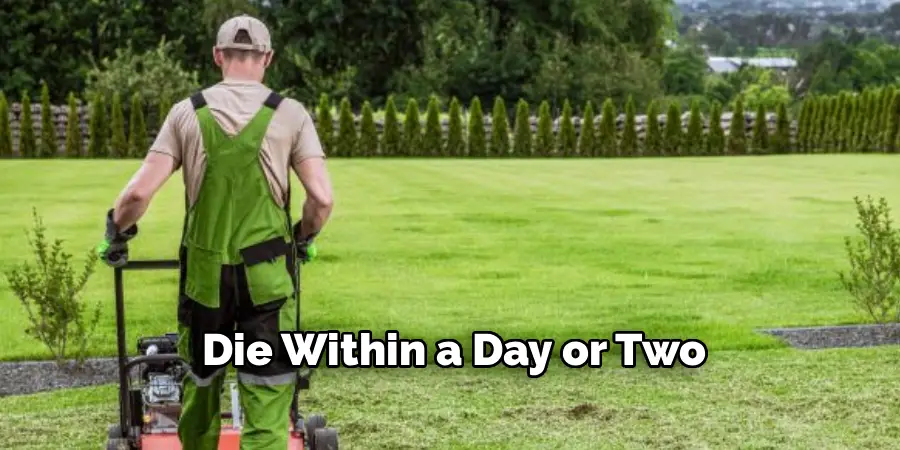
Yes, pouring boiling water on weeds is a very effective, non-toxic herbicide. The extreme heat destroys the plant’s cell structure, causing it to wilt and die within a day or two. This method is excellent for weeds in sidewalk cracks, gravel driveways, or other areas where you don’t have desirable plants nearby, as the boiling water will kill any plant it touches.
Conclusion
While a string trimmer has its place, it is far from the only solution for a tidy landscape. By embracing manual tools, you gain a level of precision, quiet, and control that power equipment often lacks. From the elegant efficiency of a scythe to the surgical accuracy of hand shears, these timeless tools connect you more deeply with your garden.
The key is to choose the right tool for the job, keep it sharp, and use good technique to work efficiently and safely. By pairing effective cutting methods with smart preventative strategies like mulching, you can maintain a beautiful, weed-free property. Now that you know how to cut weeds without a weed eater, you can enjoy a healthier garden and a more peaceful, satisfying gardening experience.

About
Outdoor Fixes is a distinguished figure in the world of Diy design, with a decade of expertise creating innovative and sustainable Diy solutions.
His professional focus lies in merging traditional craftsmanship with modern manufacturing techniques,
fostering designs that are both practical and environmentally conscious. As the author of diy,
outdoorfixes delves into the art and science of outdoorfixes-making, inspiring artisans and industry professionals alike.
Education RMIT University
(Melbourne, Australia) Associate Degree in Design (Outdoor Fixes) Focus on sustainable design, industry-driven projects,
and practical craftsmanship. Gained hands-on experience with traditional and digital manufacturing tools, such as CAD and CNC software.
Nottingham Trent University
(United Kingdom) Bachelor’s in outdoorfixes.com and Product Design (Honors) Specialized in product design with a focus on blending creativity with production
techniques. Participated in industry projects, working with companies like John Lewis and Vitsoe to gain real-world insights.
Publications and Impact
In diy, Outdoor Fixes his insights on indoor design processes, materials, and strategies for efficient production.
His writing bridges the gap between artisan knowledge and modern industry needs, making it a must-read for both budding designers and seasoned professionals.