

Are you planning to move your riding lawn mower, but don’t have a trailer? Don’t worry, there are still ways for you to transport your mower safely and efficiently without the use of a trailer.

Moving a riding lawn mower can seem like a major challenge, especially if you don’t have a trailer.
Whether you’re buying a used mower from a private seller, moving to a new home, or taking it to a repair shop, the logistics can be tricky. Many people assume a trailer is the only way, but that’s not the case. With the right equipment and a careful approach, you can safely transport your mower using a standard pickup truck.
This guide on how to transport a riding lawn mower without a trailer will walk you through everything you need to know to get your mower from one place to another without a trailer.
What are the Benefits?
Opting to transport your mower without a trailer comes with several advantages that make it an attractive option for many owners.
- Cost Savings: Renting or buying a trailer, even for a single day, can be expensive. Using a pickup truck you already own or can borrow from a friend eliminates this cost entirely. You also save on potential hitch installation fees if your vehicle isn’t already equipped.
- Convenience: Finding, booking, and picking up a rental trailer takes time and effort. Transporting your mower with a truck is often more straightforward, allowing you to move it on your own schedule without depending on a rental company’s hours or availability.
- Flexibility: A pickup truck is more maneuverable than a vehicle towing a trailer. This makes navigating tight driveways, busy streets, and parking lots much easier. You won’t have to worry about the extra length and turning radius that a trailer demands.

What Will You Need?
Before you begin, gather all the necessary tools and materials. Being prepared will make the process smoother and safer.
- Pickup Truck: A truck with a bed long enough to accommodate your mower is essential.
- A Helper: This is not a one-person job. You’ll need at least one other person to help guide and secure the mower.
- Sturdy Ramps: Invest in a pair of high-quality loading ramps designed to handle the weight of your riding mower. Check the weight capacity to ensure they are suitable. Arched ramps are preferable as they help prevent the mower deck from scraping.
- Ratchet Straps: You’ll need at least four heavy-duty ratchet straps to secure the mower firmly in the truck bed.
- Measuring Tape: Use this to measure your mower and the truck bed to ensure a proper fit.
- Work Gloves: Protect your hands during the loading and unloading process.
- Safety Goggles: Essential for protecting your eyes from any debris.
- Owner’s Manual: Keep your mower’s manual handy for specific information on its weight, dimensions, and tie-down points.
10 Easy Steps on How to Transport a Riding Lawn Mower Without a Trailer
Following these steps carefully will ensure a safe and successful move for both you and your mower.
Step 1: Prepare the Mower

The first step is to get your riding mower ready for transport. Begin by running the fuel tank down as low as possible. A full tank adds unnecessary weight and increases the risk of a fuel spill during loading or transit. If you can’t run it down, consider safely siphoning some of the fuel out into an approved container. Next, check the tire pressure. Properly inflated tires will make the mower easier to roll up the ramps. Disconnect the spark plug wire to prevent the engine from accidentally starting while you’re moving it. This is a critical safety measure you should not skip. Finally, remove any loose attachments like baggers or mulching kits. These can fall off during transport and are best moved separately.
Step 2: Measure Everything
Before you bring out the ramps, take a moment to measure. Use a measuring tape to get the exact width and length of your riding mower. Pay close attention to the width of the mower deck, as this is often the widest part. Now, measure the interior dimensions of your pickup truck bed and the width of the tailgate. You need to confirm that the mower will fit comfortably inside the truck bed. The wheels should fit between the wheel wells of the truck, and the overall length should allow you to close the tailgate if possible. If the mower is too long for the tailgate to close, you’ll need a solid plan for securing it with the tailgate down.
Step 3: Find a Safe Loading Area
The location you choose for loading is crucial for safety. Find a flat, level, and spacious area. A paved driveway or a quiet, flat street is ideal. Avoid loading on soft ground, grass, or an incline. Loading on a slope dramatically increases the risk of the mower tipping over or rolling backward unexpectedly. A level surface ensures the truck and ramps are stable, providing a secure foundation for the entire process. Ensure you have plenty of room to work around the vehicle without feeling cramped.
Step 4: Position the Truck and Ramps
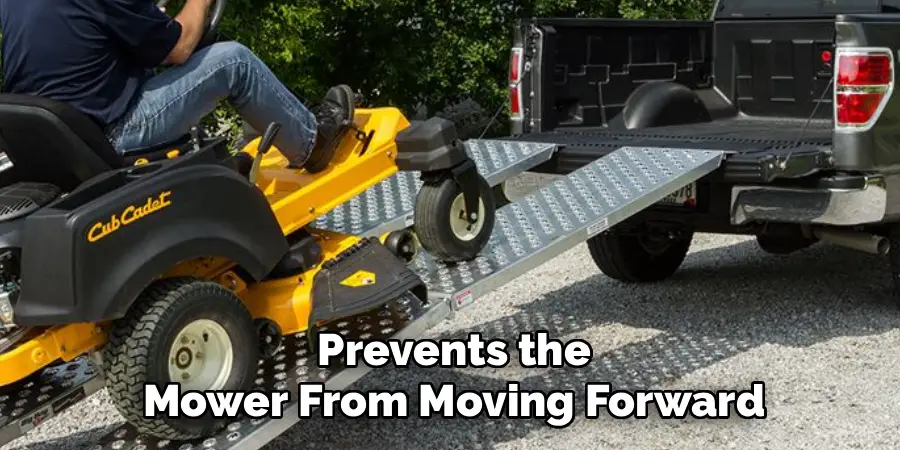
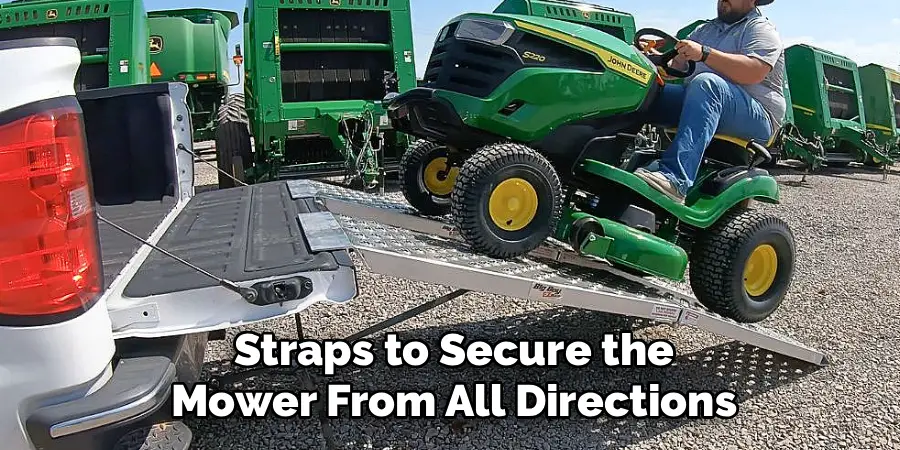
Park the truck and engage the parking brake. If you are on even a slight incline, chock the wheels for extra security. Lower the tailgate completely. Now, set up your ramps. Place the top end of each ramp securely on the edge of the tailgate. Most quality ramps have hooks or plates that rest on the tailgate for stability. Align the ramps with where the mower’s wheels will track. The distance between them should match the distance between the center of the mower’s front tires. Double-check that the ramps are straight and firmly in place.
Step 5: Secure the Ramps

This is one of the most important safety steps. Ramps can slip off the tailgate under the weight and motion of the mower, leading to a serious accident. To prevent this, use a ratchet strap or cam buckle strap to secure the ramps to the truck. Run the strap from one ramp, under the truck’s bumper or through the safety chain loops on the hitch receiver, to the other ramp. Tighten the strap until the ramps are held firmly against the tailgate and cannot slide backward. Test the ramps by pushing on them to ensure they are completely stable before proceeding.
Step 6: Load the Mower
With the ramps secure and your helper ready, it’s time to load. The safest way to do this is to push the mower up the ramps with the engine off. Have one person steer the mower from the driver’s seat while the other person helps push from behind. Pushing eliminates the risk of jerky movements or losing control that can happen when driving it up. Move slowly and steadily. The person steering should keep the wheels centered on the ramps. The person pushing should provide consistent force. If you must drive it, use the lowest possible gear and maintain a very slow, constant speed. Do not stop or start abruptly while on the ramps.
Step 7: Position the Mower in the Truck Bed
Once the mower is in the truck bed, roll it forward until the front bumper of the mower gently touches the front wall of the truck bed. Centering the mower’s weight against the cab provides the most stability during transport. This position helps prevent the mower from shifting backward if you have to brake suddenly. Engage the mower’s parking brake as an additional precaution.
Step 8: Secure the Mower with Ratchet Straps
Properly securing the mower is essential. Use at least four heavy-duty ratchet straps. Attach the first two straps to solid points on the front of the mower’s frame and connect them to the front anchor points in the truck bed. Crisscross the straps in an “X” pattern for maximum stability. Tighten them until the mower’s suspension slightly compresses. Repeat this process for the rear of the mower, attaching two more straps from the rear frame to the back anchor points of the truck. This four-point tie-down method prevents the mower from moving forward, backward, or side-to-side.
Step 9: Final Safety Check
Before you hit the road, do one last comprehensive check. Walk around the truck and inspect all four ratchet straps to ensure they are tight and secure. Pull on the mower from different angles to make sure there is no wobble or movement. Check that the ramps and any other equipment are stored securely in the truck bed so they don’t slide around. If your tailgate is down, attach a red flag to the end of the mower to alert other drivers.
Step 10: Drive Cautiously and Unload
Drive with extra care. Remember that the added weight and high center of gravity will affect your truck’s handling. Accelerate slowly, brake earlier than usual, and take turns at a reduced speed. Avoid sudden maneuvers. Once you arrive at your destination, unload by reversing the loading process. Find a flat surface, secure the ramps, and have your helper guide the mower as you slowly and carefully roll it back down.
5 Things You Should Avoid
- Using Flimsy or Short Ramps: Never use wooden planks or ramps not rated for your mower’s weight. This is a common cause of accidents.
- Loading on an Incline: Loading on uneven ground or a hill is extremely dangerous. The mower can easily tip or roll, causing injury or damage.
- Working Alone: This is a two-person job. Trying to load a heavy riding mower by yourself is unsafe and can lead to losing control of the machine.
- Forgetting to Secure the Ramps: Ramps can and do slip. Always use a strap to secure them to the truck before loading or unloading.
- Using Inadequate Tie-downs: Don’t rely on a single rope or bungee cord. Use at least four heavy-duty ratchet straps to secure the mower from all directions.
Conclusion
How to transport a riding lawn mower without a trailer is entirely possible with the right preparation and a focus on safety.
By gathering the necessary equipment, choosing a safe location, and following the steps outlined in this guide, you can confidently move your mower. Remember to measure everything, secure your ramps, use a four-point tie-down system, and always have a helper.
A cautious and methodical approach will ensure your mower arrives at its destination safely, ready for its next job.

About
Outdoor Fixes is a distinguished figure in the world of Diy design, with a decade of expertise creating innovative and sustainable Diy solutions.
His professional focus lies in merging traditional craftsmanship with modern manufacturing techniques,
fostering designs that are both practical and environmentally conscious. As the author of diy,
outdoorfixes delves into the art and science of outdoorfixes-making, inspiring artisans and industry professionals alike.
Education RMIT University
(Melbourne, Australia) Associate Degree in Design (Outdoor Fixes) Focus on sustainable design, industry-driven projects,
and practical craftsmanship. Gained hands-on experience with traditional and digital manufacturing tools, such as CAD and CNC software.
Nottingham Trent University
(United Kingdom) Bachelor’s in outdoorfixes.com and Product Design (Honors) Specialized in product design with a focus on blending creativity with production
techniques. Participated in industry projects, working with companies like John Lewis and Vitsoe to gain real-world insights.
Publications and Impact
In diy, Outdoor Fixes his insights on indoor design processes, materials, and strategies for efficient production.
His writing bridges the gap between artisan knowledge and modern industry needs, making it a must-read for both budding designers and seasoned professionals.