
Maintaining your lawn mower often feels like a chore that gets pushed to the bottom of the “honey-do” list. You change the oil, maybe check the spark plugs, but when was the last time you thought about your mower deck spindles? These crucial components are the workhorses that spin your blades thousands of times per minute. Neglecting them leads to noise, vibration, and eventually, a seized deck.
Learning how to grease lawn mower spindle is one of the most effective preventative maintenance tasks you can perform. It doesn’t take a mechanic’s certification or expensive equipment—just a bit of time and the right lubricant.
By keeping these moving parts well-greased, you ensure your mower cuts grass cleanly rather than tearing it, all while protecting your investment for seasons to come.
What are the Benefits?
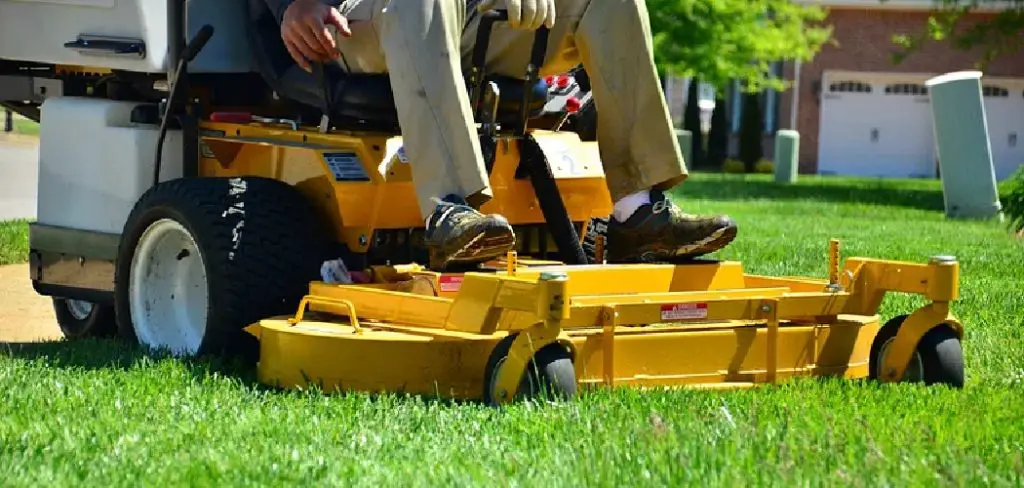
Taking the time to grease your spindles offers immediate and long-term payoffs. First, you will notice a significant reduction in noise and vibration. A dry spindle grinds metal on metal, creating friction that shakes the entire mower deck. Fresh grease provides a cushion that absorbs this shock, leading to a smoother ride.
Secondly, regular greasing extends the lifespan of your mower deck components. Spindles are expensive to replace, often costing upwards of $50 to $100 each, not including labor. Lubrication prevents the bearings from overheating and seizing up. Finally, a well-greased spindle spins more freely, which means your engine doesn’t have to work as hard to turn the blades. This improves fuel efficiency and allows maximum power to go toward cutting thick grass.
What Will You Need?
Before you start, gather these essentials to ensure the job goes smoothly.
- Grease Gun: A standard hand-pump or pistol-grip grease gun.
- Lithium-Based Grease: Check your manual, but a general-purpose No. 2 lithium grease usually works best for high-speed bearings.
- Rag or Paper Towels: For cleaning the zerk fittings (grease nipples) before and after.
- Safety Gloves: To keep your hands clean and protected.
- Jack or Ramps (for riding mowers): To safely lift the deck for access if needed.
- Socket Wrench (optional): In case you need to remove a spindle cover.
10 Easy Steps on How to Grease Lawn Mower Spindle
Step 1: Park and Prepare Your Mower Safely
Safety is non-negotiable. Park your lawn mower on a flat, level surface like a driveway or garage floor. Engage the parking brake firmly to prevent any rolling. Before you do anything else, disconnect the spark plug wire. This ensures the engine cannot accidentally start while your hands are near the cutting deck. If you are working on a riding mower, lower the deck to its lowest position for easier access to the tops of the spindles, or use ramps to lift the front if you need to reach underneath.

Step 2: Locate the Grease Fittings (Zerk Fittings)
Most modern mower spindles are equipped with a grease fitting, often called a “zerk.” These small metal nipples act as the entry point for the lubricant. Typically, you will find them on the very top of the spindle housing, sticking up through the mower deck. On some models, they might be located on the side of the housing, requiring you to remove a plastic pulley cover or guard to see them. Take a moment to locate every spindle on your deck—most decks have two or three.
Step 3: Clean the Zerk Fitting Thoroughly
This is a critical step that many people skip. Over time, grass clippings, dirt, and old oil accumulate around the grease fitting. If you attach your grease gun to a dirty fitting, the high pressure will force that grit directly into the delicate bearings. Using your rag or paper towel, wipe the zerk fitting until it shines. If there is hardened debris, use a small pick or your fingernail to scrape it off. You want the tip to be perfectly clean metal.

Step 4: Prepare and Prime Your Grease Gun
If you haven’t used your grease gun in a while, it might need priming. Ensure the cartridge is loaded correctly. Pump the handle a few times over a trash can or rag until you see fresh grease extruding from the coupler tip. This removes any air pockets in the line, ensuring that when you attach it to the mower, you are pumping lubricant, not air. Air pockets can give you a false sense that the spindle is full when it isn’t.
Step 5: Attach the Grease Gun Coupler
Take the nozzle of your grease gun and push it firmly onto the zerk fitting on the first spindle. You should feel a slight “click” or snap as the jaws of the coupler lock onto the fitting. It needs to be seated squarely; if it is at an angle, grease will likely ooze out the sides rather than going into the fitting. Give the hose a gentle tug to make sure it is locked on securely before you start pumping.
Step 6: Pump Grease into the Spindle
Begin pumping the handle of the grease gun. Use slow, steady strokes. As you pump, you are forcing new grease into the housing and pushing it into the bearings. Listen and feel for resistance. If the handle becomes impossible to squeeze, the fitting might be clogged, or the bearing is already full. Watch the base of the spindle or the relief valve (if equipped). You generally want to pump until you feel resistance increase significantly or you see a tiny amount of old, dark grease begin to seep out from the seals.

Step 7: Watch for “Purging” of Old Grease
In many maintenance scenarios, seeing grease squeeze out is a good sign—it means the cavity is full. This is called “purging.” When you see dark, dirty grease exiting the seal or relief hole, keep pumping slowly until you see the color change to the fresh, clean grease you are using. This confirms that you have flushed out the old, contaminated lubricant and replaced it entirely with new grease. However, be careful not to over-pressurize sealed bearings if your manual warns against it, as this can blow out the seals.
Step 8: Disconnect the Grease Gun
Once the spindle is sufficiently greased, you need to remove the coupler. This can sometimes be tricky because of the pressure built up in the fitting. Do not yank the hose straight back, as you might break the zerk fitting. Instead, tilt the coupler nozzle to the side to break the seal/suction, then twist and pull it off. Wipe away any excess grease that remains on the fitting to prevent it from attracting dirt later.
Step 9: Repeat for All Spindles
Move on to the next spindle and repeat Steps 3 through 8. Remember that on a three-blade deck, the center spindle is often the hardest to reach and arguably the most important because it often endures the most heat. Ensure you don’t miss any idler pulleys or wheel spindles that might also have grease fittings while you have the gun out. Consistency across all moving parts ensures even wear and tear.
Step 10: Clean Up and Reconnect
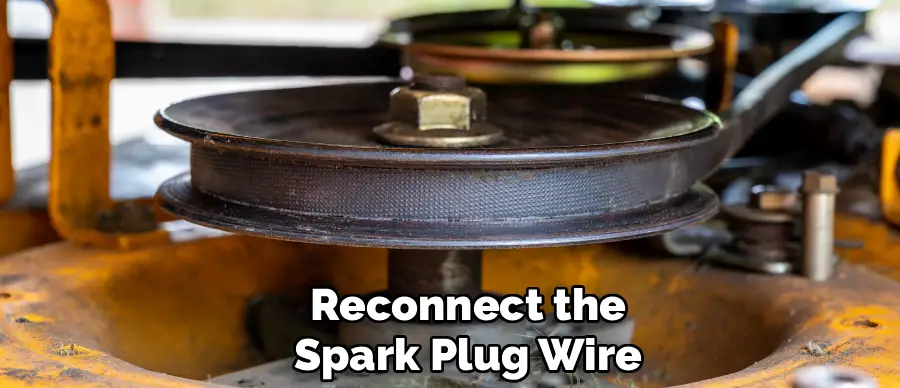
After all spindles are greased, use your rag to wipe up any globs of grease that may have fallen onto the deck or belts. Grease on a drive belt can cause slipping and rapid deterioration. Once everything is clean, remove the jack or ramps if used, reconnect the spark plug wire, and disengage the parking brake. Start the mower and engage the blades for a minute (without cutting grass) to help distribute the new grease evenly throughout the bearings.
5 Things You Should Avoid
- Ignoring the Owner’s Manual: Not all spindles are greasable. Some are “sealed for life” and do not have zerk fittings. Trying to force grease into a sealed unit or drilling a hole to add a fitting will ruin the part. Always check your manual first.
- Over-Greasing Sealed Bearings: If your manual specifies a certain number of pumps (e.g., “3 pumps only”), adhere to it. Over-pressurizing can blow out the protective rubber seals, allowing dirt and moisture to enter and destroy the bearing faster than if you hadn’t greased it at all.
- Using the Wrong Grease: Don’t just use whatever old tub of goop you found in the shed. Using a low-temp or low-quality grease in a high-speed spindle causes the lubricant to liquefy and run out when the mower gets hot, leaving the bearings unprotected.
- Greasing Dirty Fittings: As mentioned in the steps, pumping grease through a dirty zerk fitting is the quickest way to inject sand and grit directly into your bearings. It acts like sandpaper, grinding down the internal components from the inside out.
- Getting Grease on the Belts: Be very messy and careless. If grease drips onto the mower deck drive belt, it causes slippage. The blades won’t spin at full speed, the cut will be uneven, and the friction from the slipping belt can burn it out completely.
Conclusion
Learning how to grease lawn mower spindle is a simple, low-cost maintenance task that pays huge dividends. It keeps your machine running quieter, cutting better, and lasting longer.
By following these steps and avoiding common pitfalls, you can ensure your mower is always ready to tackle the lawn, saving you money on repairs and making your summer chores just a little bit smoother.
Don’t wait until you hear a grinding noise—grab your grease gun and give your mower the care it deserves today.

About
Outdoor Fixes is a distinguished figure in the world of Diy design, with a decade of expertise creating innovative and sustainable Diy solutions.
His professional focus lies in merging traditional craftsmanship with modern manufacturing techniques,
fostering designs that are both practical and environmentally conscious. As the author of diy,
outdoorfixes delves into the art and science of outdoorfixes-making, inspiring artisans and industry professionals alike.
Education RMIT University
(Melbourne, Australia) Associate Degree in Design (Outdoor Fixes) Focus on sustainable design, industry-driven projects,
and practical craftsmanship. Gained hands-on experience with traditional and digital manufacturing tools, such as CAD and CNC software.
Nottingham Trent University
(United Kingdom) Bachelor’s in outdoorfixes.com and Product Design (Honors) Specialized in product design with a focus on blending creativity with production
techniques. Participated in industry projects, working with companies like John Lewis and Vitsoe to gain real-world insights.
Publications and Impact
In diy, Outdoor Fixes his insights on indoor design processes, materials, and strategies for efficient production.
His writing bridges the gap between artisan knowledge and modern industry needs, making it a must-read for both budding designers and seasoned professionals.