
TL;DR: A modern backyard usually works best when you begin with clear zones, choose restrained hardscaping such as concrete or porcelain pavers, keep planting simple, and use lighting, furniture, and one strong focal feature to pull the space together. The goal is not just a yard that looks current, but one that feels calm, usable, and well resolved.
Turning an outdated backyard into a modern outdoor space takes more than swapping in a few trendy materials. It asks for a plan. More importantly, it asks for restraint. Clean lines, open circulation, and a limited palette often do more than an overstuffed design full of competing features.
There is also a practical side to this. A backyard that has been carefully thought through may improve how the property looks and how it functions day to day. It could also support resale value, though that depends on the market and the quality of the work. Some people want a quiet place to sit with coffee in the evening. Others are planning dinners, parties, and weekends with guests. Either way, a step-by-step approach on how to design a modern backyard tends to produce better results than improvising as you go.
Materials You’ll Need
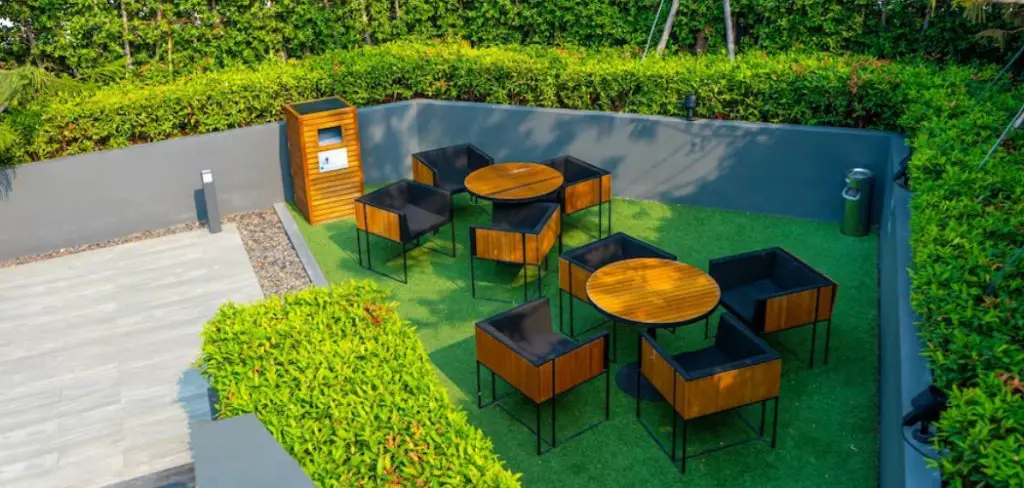
Before starting, gather the basic tools and materials that support a modern layout. The exact list will shift with the scale of the project, of course, but most contemporary backyard designs rely on some version of the following:
- Graph paper and a measuring tape for laying out the space accurately.
- Hardscaping materials such as large-format concrete pavers, composite decking, gravel, or porcelain tile rated for outdoor use.
- Low-maintenance plants, including ornamental grasses, succulents, native perennials, or other species with a strong form.
- Fence or screening materials such as horizontal wood slats or simple metal panels.
- Outdoor LED fixtures, which may include path lights, uplights, wall lights, or discreet strip lighting.
- Outdoor furniture with straightforward lines and weather-resistant cushions or upholstery.
- One focal element, such as a fire pit, fireplace, basin fountain, or similar feature.
7 Simple Step-By-Step Guidelines on How to Design a Modern Backyard
Step 1: Define Your Layout and Zones
A convincing modern backyard usually begins with organization. Not stiffness, exactly, but intention. Each part of the yard should have a job, whether that is dining, lounging, cooking, walking, or planting. One of the easiest ways to start is by sketching a scaled plan of the site and marking existing conditions: sun exposure, slopes, drainage paths, doors, utilities, and any views worth preserving.
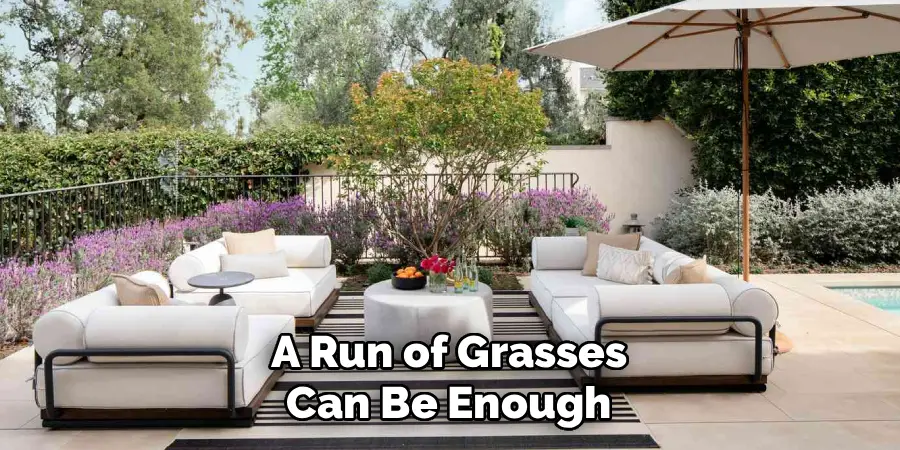
From there, break the yard into functional zones that make sense for how you actually live. That sounds obvious, yet it is often skipped. A dining area placed too far from the kitchen becomes annoying fast. A lounge area with no shade may look nice in photos and sit empty in July. Subtle dividers can help define each zone without chopping the yard into pieces. A low wall, a change in paving, or a run of grasses can be enough. The point is to create order while still letting the space breathe.
Step 2: Choose Sleek Hardscaping Materials
Hardscaping does a great deal of visual work in a modern backyard. It sets the lines, establishes the rhythm of the space, and often determines whether the design feels calm or busy. Materials like poured concrete, large porcelain pavers, and broad stone slabs tend to read as more contemporary because the surfaces are cleaner and the joints are more controlled.
That does not mean every yard needs to look severe. In fact, some of the best modern spaces soften those hard edges just enough. Still, if the goal is a clearly modern look, irregular flagstone and traditional red brick often pull the design in another direction. Layout matters too. A grid, a long linear run, or a tightly repeated module can make even simple materials feel deliberate. Contrast helps when used sparingly; charcoal gravel beside pale concrete, for example, can sharpen the geometry without turning the space into a sample board.
Step 3: Select Minimalist Plantings
Planting in a modern backyard usually works best when it is edited. Not barren. Edited. Instead of filling every corner with mixed flowers and dense shrubbery, choose plants for form, spacing, and repeatability. Agave, boxwood, upright grasses, bamboo in the right setting, and other sculptural plants are often effective because they hold a clear shape.
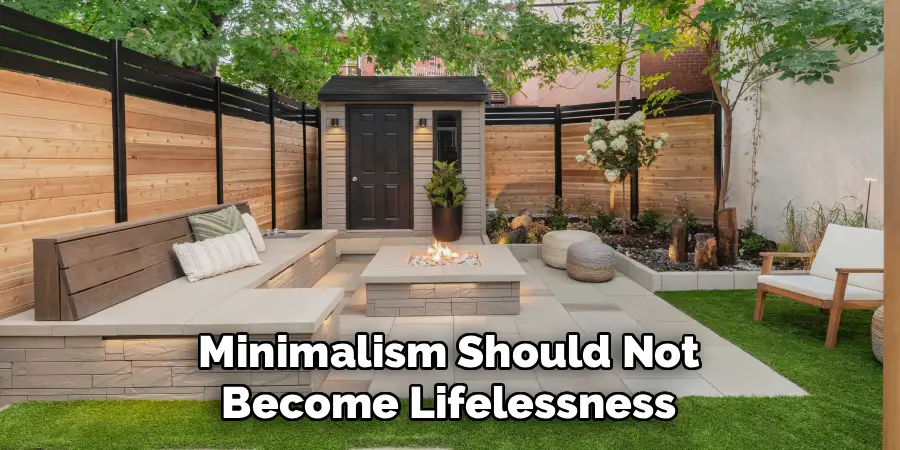
A restrained planting palette can also make maintenance more manageable. Repeating the same few species across the yard tends to feel more settled than mixing too many colors and textures at once. Green-on-green planting schemes often suit this style well, with muted blooms used only where they earn their place. Raised planters in corten steel or smooth concrete can help frame the vegetation and keep the composition looking intentional. That said, minimalism should not become lifelessness. A backyard still needs softness somewhere, especially if there is a lot of paving.
Step 4: Install Modern Lighting Solutions
Lighting changes everything after dusk. A backyard that looks thoughtful during the day can disappear at night if the lighting has been treated as an afterthought. In modern spaces, the best results often come from layered light rather than a few harsh fixtures. Concealed LED strip lighting under steps, benches, or retaining walls can create a quiet glow and improve safety at the same time.
Then there is accent lighting. Path lights help with movement, but they should not resemble an airport runway. A few well-placed uplights on specimen plants or textured walls usually go further than over-lighting the entire yard. Fixture finish matters less than placement, though matte black and muted metallics often blend well into a contemporary scheme. Warm white light is generally the safer choice here. Cool-toned lighting can make a backyard feel sterile very quickly, which is not usually what people want from a space meant for lingering.
Step 5: Incorporate a Striking Fire or Water Feature
Most modern backyards benefit from one feature that anchors the composition. Not five. One. A fire pit or outdoor fireplace often fills that role well, particularly when it is built in a simple geometric form using concrete, dark stone, or metal. Rectangles and squares tend to suit contemporary layouts better than ornate detailing, and materials like fire glass or smooth stone usually look cleaner than imitation logs.
Water can work just as well, sometimes better, depending on the mood you want. A reflecting basin, a narrow wall fountain, or a quiet spillway built into a retaining wall can introduce movement and sound without overwhelming the rest of the design. Classical fountains with elaborate ornament rarely sit comfortably in a modern scheme. Simpler forms usually age better. They also leave more room for the architecture and planting to do their share of the work.

Step 6: Upgrade to Contemporary Outdoor Furniture
Furniture has a way of exposing weak design decisions. You can build a beautiful patio, but if the seating is bulky, ornate, or just out of scale, the whole yard starts to feel confused. For a modern backyard, look for pieces with a lower profile, straightforward silhouettes, and materials that hold up outdoors without constant fuss. Powder-coated aluminum, teak, and stainless steel are common for a reason.
Cushions and upholstery matter too. Neutral tones such as charcoal, sand, off-white, or soft gray generally sit well within a modern palette. Loud patterns often compete with the rest of the space unless they are used very selectively. Modular seating can be especially useful because it adapts to different situations, from a quiet evening outside to a larger gathering. A small amount of contrast, perhaps a single patterned cushion or one accent chair, can keep the space from feeling too controlled.
Step 7: Add Smart Outdoor Technology
Technology is not essential to every modern backyard, but in some cases, it does make the space easier to manage and more pleasant to use. Smart irrigation, for instance, may help regulate watering based on weather conditions, which is particularly helpful in landscapes built around low-maintenance planting. It can save time, and depending on the system, it could reduce waste as well.
Other additions are more about convenience than necessity. Weatherproof speakers tucked into planting beds or mounted discreetly nearby can preserve the look of the yard better than visible audio equipment. An outdoor television under a pergola might suit households that actually entertain that way; for others, it may be unnecessary clutter. The broader point is this: technology should support the design, not announce itself. If every feature depends on an app and constant maintenance, the backyard may start to feel less relaxing, not more.
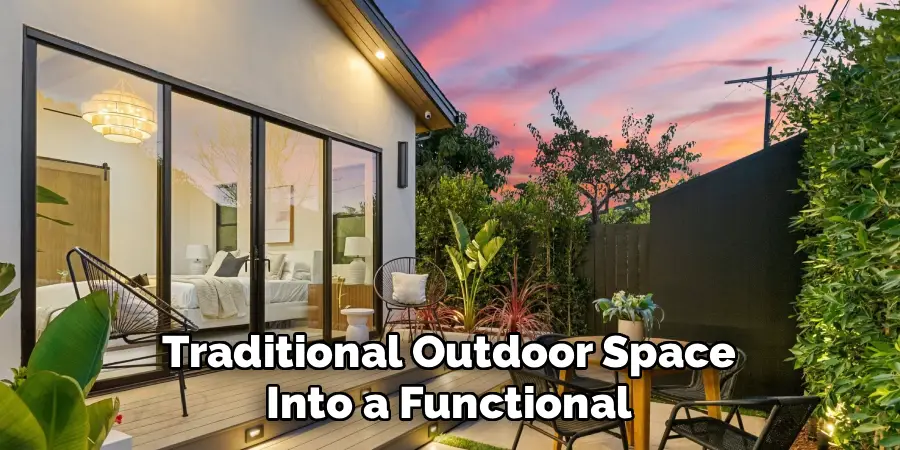
Following these steps on how to design a modern backyard can transform a traditional outdoor space into a functional and stylish oasis.
Common Mistakes to Avoid
One of the most common mistakes is trying to include too many materials in one small area. Concrete, wood, gravel, tile, brick, and stone can all be attractive on their own, but together they often create visual noise.
Poor attention to scale is another recurring problem. Oversized sectionals can eat up circulation space, while tiny features can look stranded in a large yard. Drainage is also easy to underestimate until water starts pooling where it should not. And lighting—oddly enough—gets neglected all the time. A backyard that cannot function after sunset is only half finished.
Do You Need To Use Professionals?
Some homeowners can absolutely handle portions of a modern backyard project on their own, especially planting, furniture selection, or small cosmetic updates. Once grading, drainage, electrical work, gas lines, retaining walls, or major hardscaping enter the picture, professional help becomes much harder to dismiss. A landscape architect or designer may help bring coherence to the layout, while contractors are often necessary for safe installation and code compliance.
There is a cost to hiring professionals, obviously. Still, there is also a cost to redoing bad work. In many cases, bringing in experienced help early could prevent expensive errors later, especially on projects where drainage and structural elements are involved.
How Much Will It Cost?
Costs vary widely, and any precise figure depends on site conditions, region, labor rates, and material choices. At the lower end, a modest refresh with simple gravel, new planting, and budget-conscious furniture may begin around $5,000 to $10,000. A more complete renovation with concrete work, custom features, upgraded lighting, premium decking, or an outdoor kitchen can rise into the $25,000 to $75,000-plus range fairly quickly.
That spread is large, but that is the reality of exterior work. Small decisions add up. If you are budgeting, it is wise to set a clear spending limit early and leave room for surprises. A contingency of around fifteen percent is often recommended for exactly that reason.
Frequently Asked Questions
Q1: What Are The Best Plants For A Modern Backyard Design?
A1: The best plants for a modern backyard are usually those with a clear shape and a manageable growth habit rather than loose, sprawling bloom-heavy forms. Agave, aloe, upright ornamental grasses, bamboo used thoughtfully for screening, and clipped boxwoods are all common choices. A mostly green planting palette often helps keep the space visually quiet, which suits contemporary design well.
Q2: How Can I Make A Small Backyard Look Modern?
A2: In a small backyard, restraint matters even more. Limit the material palette to a few finishes that work together, such as concrete with wood or gravel with large pavers. Built-in seating along the edges can free up floor space, and vertical elements like simple trellises or slatted screens may add function without making the yard feel crowded. Keeping the center open often makes the space read as larger than it is.
Q3: Are Modern Backyards Difficult To Maintain Over Time?
A3: In many cases, modern backyards are easier to maintain than traditional gardens because they rely more heavily on paving, simpler planting schemes, and durable materials. That said, low maintenance is not the same as no maintenance. Surfaces still need cleaning, planting needs trimming, and drainage or lighting systems should be checked periodically. If the design is well planned, though, the ongoing work is usually manageable.
Achieving Your Ideal Modern Outdoor Space
Designing a modern backyard can be deeply satisfying because it asks you to think about both appearance and use. The best spaces do not just photograph well. They support ordinary life. A clean layout, carefully chosen materials, and planting with some discipline can create an outdoor area that feels settled, calm, and genuinely useful.
If the process starts to feel overly technical, or if you are dealing with grading, permits, or a complicated site, it may be worth consulting a local landscape architect or contractor before construction begins. That kind of guidance can save time and frustration. Start with the layout. Get the bones right. The rest tends to follow. Thanks for reading this guide on how to design a modern backyard.

About
Outdoor Fixes is a distinguished figure in the world of Diy design, with a decade of expertise creating innovative and sustainable Diy solutions.
His professional focus lies in merging traditional craftsmanship with modern manufacturing techniques,
fostering designs that are both practical and environmentally conscious. As the author of diy,
outdoorfixes delves into the art and science of outdoorfixes-making, inspiring artisans and industry professionals alike.
Education RMIT University
(Melbourne, Australia) Associate Degree in Design (Outdoor Fixes) Focus on sustainable design, industry-driven projects,
and practical craftsmanship. Gained hands-on experience with traditional and digital manufacturing tools, such as CAD and CNC software.
Nottingham Trent University
(United Kingdom) Bachelor’s in outdoorfixes.com and Product Design (Honors) Specialized in product design with a focus on blending creativity with production
techniques. Participated in industry projects, working with companies like John Lewis and Vitsoe to gain real-world insights.
Publications and Impact
In diy, Outdoor Fixes his insights on indoor design processes, materials, and strategies for efficient production.
His writing bridges the gap between artisan knowledge and modern industry needs, making it a must-read for both budding designers and seasoned professionals.