
For many pond owners, the time eventually comes when they need to catch their goldfish. Whether it is for a seasonal deep clean, a health inspection, a move to an indoor winter tank, or simply to manage the population, this task can seem daunting. Goldfish can be surprisingly fast, clever, and elusive in the familiar comfort of their pond. The thought of chasing them around can feel like a stressful ordeal for both the owner and the fish.
However, with the right approach and a little patience, it does not have to be. This comprehensive guide will show you how to catch goldfish in pond environments safely and effectively, minimizing stress for your aquatic pets. We will cover preparation, different netting techniques, and even passive trapping methods to ensure success, even in murky water or a heavily planted pond.
Preparation: Why You Need to Catch Them and Safety First
Before you even think about putting a net in the water, proper preparation is essential. Rushing the process is one of the biggest mistakes an owner can make, as it inevitably leads to stressed and potentially injured fish. A panicked chase around the pond can damage their delicate fins, scrape off their protective slime coat, and leave them vulnerable to illness. Understanding that the goal is to handle this task with calm and deliberate action will set you up for success. The primary objective is to make the experience as low-stress as possible, which requires having everything ready before you begin.
Understanding Fish Stress
It is important to understand how stress physically affects your goldfish. When a fish becomes panicked, its body undergoes a physiological stress response. This can weaken its immune system and damage its slime coat, which is a crucial protective barrier against bacteria, parasites, and fungi in the water. A calm, methodical approach is far more effective than a frantic one. By moving slowly and deliberately, you can often catch the fish before they even realize they are in danger, keeping their stress levels to a minimum.
Preparing a Holding Container
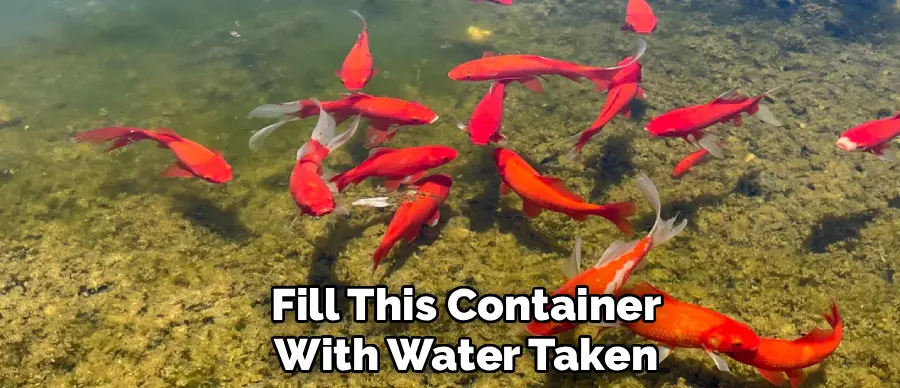
Before you catch the first fish, you must have a safe, temporary home ready for them. Prepare a large tub, stock tank, or even a child’s wading pool to serve as a holding container. You must fill this container with water taken directly from the pond. Using fresh tap water can shock the fish due to differences in temperature, pH, and the presence of chlorine. Place the holding tank in a shaded area to keep the water temperature stable and add a portable aerator or air stone to ensure the water remains well-oxygenated. Have a net or lid ready to cover the container immediately, as stressed fish are prone to jumping.
Reducing Water Volume for Easier Catching
One of the most effective strategies to simplify catching your goldfish is to limit their ability to evade you. In a full pond, fish have ample space to swim down and away, making netting a frustrating challenge. By partially draining the pond, you significantly reduce their maneuvering room and bring them into a more manageable space.
Draining the Pond Partially
Using a sump pump or a pond vacuum, begin to lower the water level. Aim to pump out about 25-50% of the pond’s total volume. If the water is healthy, you can save it in large containers to be returned to the pond later, which helps preserve the established ecosystem. As the water level drops, the fish will have less vertical space to dive, forcing them to stay in a shallower water column where they are much easier to see and net.
Clearing Obstacles
Goldfish are masters of using their environment to hide. Before you begin netting, take the time to temporarily remove any obstacles that could serve as hiding spots or could snag your net. Lift out any potted plants, floating vegetation like water hyacinths, and decorative items like statues or logs. This creates a clearer, more open area to work in, giving the fish fewer places to hide and reducing the chances of your net getting caught on something.
The Two-Net Method: A Professional Technique
Instead of chasing a single fish with a single net, a far more effective approach used by professionals is the two-net method. This technique is less about frantic scooping and more about strategic herding. It reduces stress on the fish and dramatically increases your chances of catching them quickly and safely.
Using a Guide Net and a Catch Net
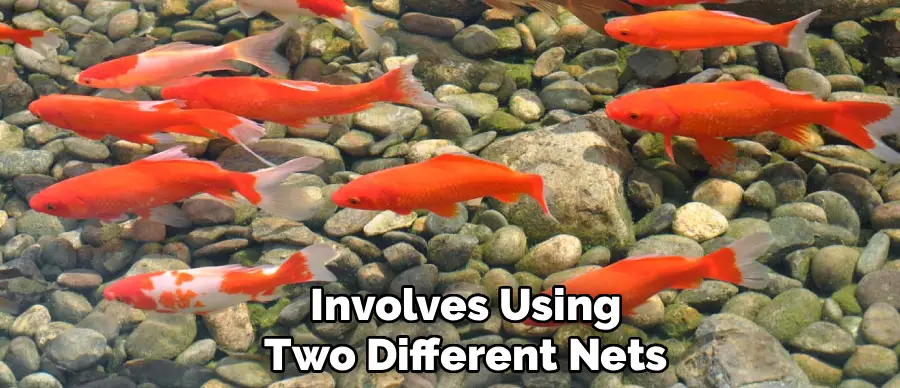
The method involves using two different nets. The first is a large, wide net that will serve as a stationary barrier or a “guide” net. The second is a smaller, more maneuverable “catch” net. The idea is to place the large net in the water against a wall of the pond, creating a backstop. Then, you use the smaller net to slowly and calmly guide the fish toward the stationary net, where they can be easily scooped up.
Herding vs. Chasing
The key to the two-net method is to think about “herding” rather than “chasing.” Goldfish are less likely to panic and scatter if you use slow, deliberate movements. Use the smaller catch net to gently encourage the fish to swim in the direction of your larger guide net. Avoid sudden, quick movements or plunging the net into the water, as this will spook them. By herding them into a confined space against the large net, you can lift them from the water with minimal pursuit and stress.
Step-by-Step Guide: How to Catch Goldfish in Pond
This detailed guide outlines the standard netting process, incorporating the principles of preparation and low-stress handling. Following these steps in order will provide you with a clear, actionable plan for successfully and safely catching your pond fish.
Step 1: Lower the Water Level
As previously discussed, this is the single most important factor for success. Begin by using a pump to drain the pond partially, reducing the total water volume by at least one-third. This immediately limits the swimming area, especially the depth, making the fish much more accessible and preventing them from diving deep to escape your net.
Step 2: Remove Hiding Spots
With the water level lowered, proceed to remove any items that provide cover. Carefully lift out potted water lilies, submerged oxygenating plants, and any decorative structures. Place them in a shady spot, keeping their roots moist. This step creates an open “arena” with fewer places for the fish to dart into and hide, simplifying the herding and netting process.
Step 3: Corner the Fish
Now, it is time to gently guide the fish. With your nets in hand, slowly enter the pond if necessary. Use your larger net or your body to encourage the fish toward a specific corner or a shallow plant shelf. The goal is to reduce their available escape routes. Move slowly and avoid making large splashes. Working methodically, you can herd the school of fish into a more confined area, making the final catch much easier.
Step 4: Scoop from Below
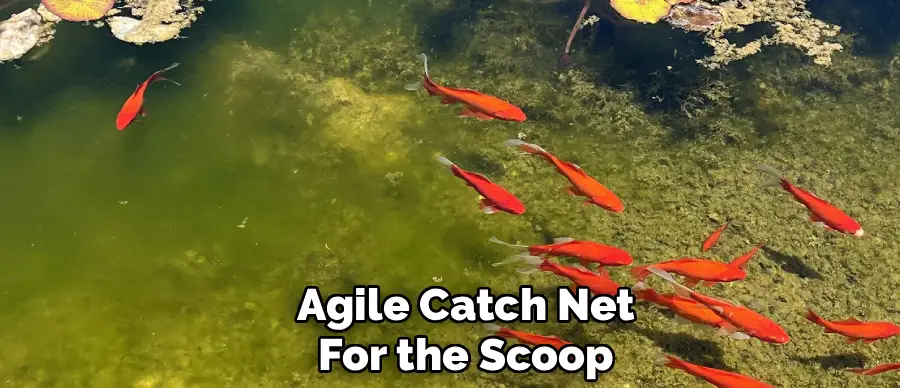
Once the fish are cornered, use your smaller, more agile catch net for the scoop. The correct technique is to approach the fish from the side or behind and bring the net up from underneath them. Plunging the net down from above is a predatory motion that will cause the fish to panic and scatter. A smooth, upward scooping motion is far less alarming and much more effective.
Step 5: Transfer Quickly to the Holding Tank
As soon as a fish is in the net, you need to move it to the prepared holding tank quickly and carefully. Do not carry the fish across the yard in a dangling net, as its own weight can cause injury against the mesh. Instead, use your other hand to support the bottom of the net, keeping the fish cradled. Walk it immediately over to the holding tank and gently lower it into the water.
Step 6: Cover the Tank
This final step is crucial for fish safety. As soon as the fish are in the holding container, cover it securely with a net or a lightweight lid. Fish, especially when stressed, are powerful jumpers. Covering the tank prevents anyone from making a panicked leap out of the container while you are focused on catching the remaining fish in the pond.
Passive Methods: Using Fish Traps
For pond owners who cannot easily drain their pond or who have particularly large, deep, or murky ponds with extremely elusive fish, manual netting can be nearly impossible. In these situations, a passive approach using baited fish traps can be an excellent, low-effort alternative.
Commercial Minnow Traps
Standard commercial minnow traps, often made of wire mesh, are readily available and work very well for catching goldfish. These traps are typically cylindrical with an inverted funnel at each end. You can bait the trap with fish food pellets placed in a small mesh bag or even a piece of bread. The fish are lured in by the bait through the wide opening of the funnel, but find it difficult to locate the small opening to exit. Simply place the baited trap in the pond and check it every few hours.
DIY Bottle Traps for Smaller Goldfish
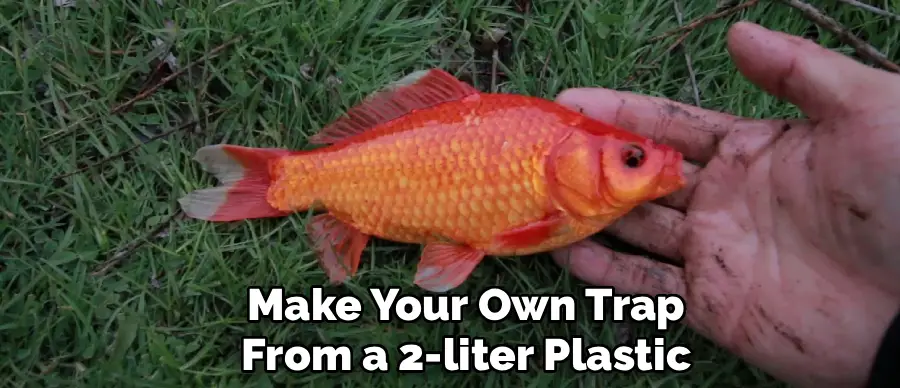
For catching smaller goldfish or fry, you can easily make your own trap from a 2-liter plastic soda bottle. Cut the top third of the bottle off. Place some bait in the bottom section, then invert the top piece (with the cap removed) and fit it back into the bottle, creating a funnel. The small fish will swim in through the opening to get the bait, but will be unable to find their way out. This is a great, cost-effective method for managing population growth.
Dealing with Murky Water and Deep Ponds
When the water is murky or the pond is too deep for effective netting, you need to employ different strategies. These techniques rely on luring the fish into a catchable position or using equipment that does not require you to see them clearly.
Feeding to Surface
A simple but effective strategy is to use food to your advantage. At a consistent time each day, feed your fish high-quality floating pellets. They will become conditioned to come to the surface in a specific area when they see you. On catching day, you can get them to congregate at the surface and use a quick, wide net to scoop them up before they realize what is happening and dive back down.
Seine Netting
For large, deep, or murky ponds, a seine net is the professional’s tool of choice. A seine is a very long net with weights along the bottom edge and floats along the top. It is designed to be pulled through the water by two people, one on each side of the pond. As you walk the net from one end of the pond to the other, it effectively acts as a moving wall, corralling all the fish in front of it into a smaller, contained area where they can be easily netted.
Handling and Inspecting the Goldfish
Once caught, you may need to handle the fish for a health inspection or to move them between containers. How you handle them during these brief moments is critical to their well-being.
Wet Hands Only
This is the golden rule of handling fish. Never, ever touch a fish with dry hands. Your dry skin will strip off their protective slime coat, which is their primary defense against infection. If you must touch the fish, always wet your hands thoroughly with pond water first. This simple act can prevent significant harm.
Minimizing Time out of Water
Keep the fish’s exposure to air to an absolute minimum—seconds, not minutes. If you need to inspect a fish for signs of disease or injury, it is best to do so while it is in a small, clear container of water. If you must lift it out of the water, be prepared to do what you need to do quickly and return it to the water immediately.
Releasing the Fish Back into the Pond
After your pond maintenance is complete and you are ready to return the fish, the reintroduction process must be done just as carefully as the removal.
Acclimation
If you have added a significant amount of fresh, dechlorinated water to the pond, its temperature and pH may be different from the water in your holding tank. To prevent shock, you must acclimate the fish. Float the holding container (or bags with the fish inside) in the pond for 20-30 minutes. This allows the water temperatures to equalize gradually and safely.
Gentle Release
Once the fish are acclimated, do not simply pour them into the pond from a height. This can be stressful and disorienting. Instead, gently lower the container into the water and tip it to the side, allowing the fish to swim out on their own time and into their clean, refreshed home.
Conclusion
Catching the fish in your backyard pond does not need to be a chaotic chase. By focusing on preparation, patience, and the safety of your fish, you can accomplish the task efficiently and with minimal stress. The key takeaways are to reduce the water volume, use effective techniques like the two-net method, and always have a safe, oxygenated holding tank ready.
Remember that patience is your most valuable tool. By understanding how to catch goldfish in pond setups properly, you can perform necessary maintenance or manage your population while ensuring your aquatic pets remain healthy and unharmed. So, prepare your equipment, take a deep breath, and approach the task with confidence, knowing you have a solid plan for a smooth and successful process.

About
Outdoor Fixes is a distinguished figure in the world of Diy design, with a decade of expertise creating innovative and sustainable Diy solutions.
His professional focus lies in merging traditional craftsmanship with modern manufacturing techniques,
fostering designs that are both practical and environmentally conscious. As the author of diy,
outdoorfixes delves into the art and science of outdoorfixes-making, inspiring artisans and industry professionals alike.
Education RMIT University
(Melbourne, Australia) Associate Degree in Design (Outdoor Fixes) Focus on sustainable design, industry-driven projects,
and practical craftsmanship. Gained hands-on experience with traditional and digital manufacturing tools, such as CAD and CNC software.
Nottingham Trent University
(United Kingdom) Bachelor’s in outdoorfixes.com and Product Design (Honors) Specialized in product design with a focus on blending creativity with production
techniques. Participated in industry projects, working with companies like John Lewis and Vitsoe to gain real-world insights.
Publications and Impact
In diy, Outdoor Fixes his insights on indoor design processes, materials, and strategies for efficient production.
His writing bridges the gap between artisan knowledge and modern industry needs, making it a must-read for both budding designers and seasoned professionals.