
Few things ruin a sunny afternoon faster than walking out to your backyard and finding a cloudy, murky swimming pool. You want to dive into crisp, clear water, but instead, you are looking at a milky mess. Pool water turns cloudy for several reasons, including chemical imbalances, environmental debris, or heavy usage.
Baking soda, known chemically as sodium bicarbonate, offers a fantastic way to restore the sparkle to your pool water. It specifically targets the water’s total alkalinity, which plays a major role in keeping your pool clear and balanced. By raising the alkalinity, you create a stable environment that allows your chlorine to work effectively against algae and bacteria.
This guide on how to clear a cloudy pool with baking soda walks you through the entire process, giving you everything you need to transform your cloudy water back into an inviting oasis.
What are the Benefits
Using baking soda to clear your pool comes with a wealth of benefits that make it a favorite choice among smart pool owners. First, it is incredibly cost-effective. Commercial alkalinity increasers found in pool supply stores often cost significantly more than bulk baking soda, even though they contain the exact same active ingredient. You can save a considerable amount of money over a swimming season by making this simple switch.
Second, baking soda is naturally safe and gentle. Unlike aggressive pool chemicals that can irritate your eyes and skin, sodium bicarbonate is a mild substance. You do not have to worry about handling dangerous acids or toxic compounds. It also dissolves smoothly and rarely causes damage to your pool liner, tile, or internal plumbing.
Finally, baking soda acts as a powerful buffer for your water’s pH levels. When your total alkalinity is too low, your pH levels will bounce wildly up and down, causing cloudy water and reducing the effectiveness of your sanitizers. Baking soda locks that pH level into place. This stabilization means your chlorine can do its job properly, eating away the microscopic contaminants that cause water cloudiness.
What Will You Need?
Before you begin treating your water, gather the necessary supplies. Having everything on hand makes the process smooth and efficient.
- A reliable pool water testing kit
- Baking soda
- A heavy-duty pool brush
- A telescopic pool pole
- A bucket
10 Easy Steps on How to Clear a Cloudy Pool with Baking Soda
Step 1: Test Your Pool Water Before Doing Anything Else
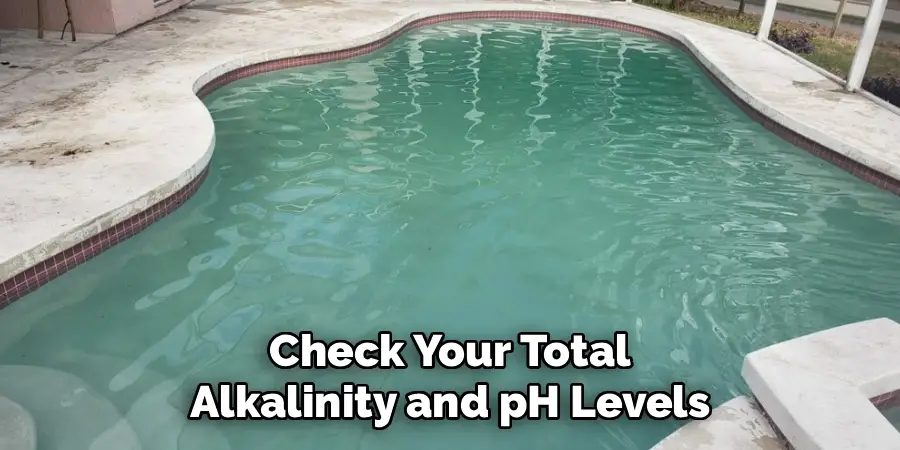
Never add chemicals to your pool without knowing exactly what your water currently looks like on a chemical level. Grab your liquid test kit or test strips to check your total alkalinity and pH levels. Cloudy water often points to low alkalinity, which usually drags the pH down with it. The ideal range for total alkalinity sits between 80 and 120 parts per million (ppm). Your pH should rest comfortably between 7.2 and 7.6. If your alkalinity reads below 80 ppm, you have found the primary culprit behind your murky water. Record these numbers accurately, as they provide the baseline you need to calculate your chemical additions.
Step 2: Determine Your Exact Pool Volume
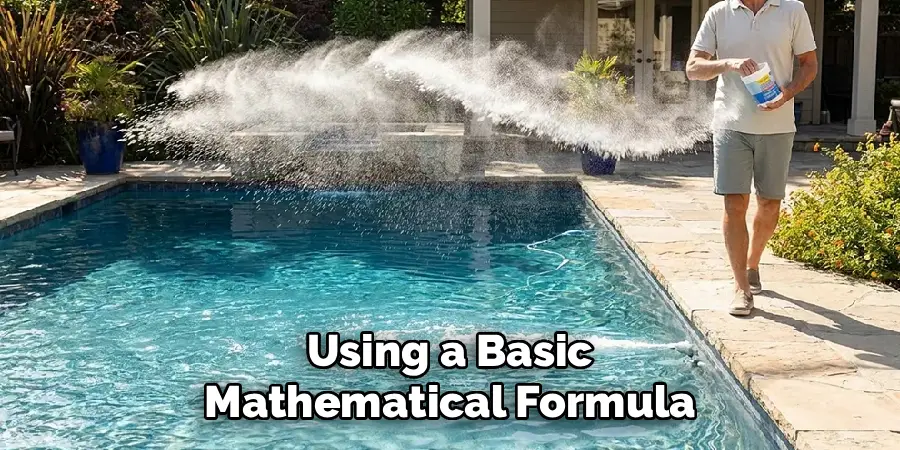
You cannot measure the right amount of baking soda if you do not know how much water your pool holds. If you already know your pool’s gallon capacity, you can skip to the next step. If you do not know it, you must calculate it using a basic mathematical formula. For a rectangular pool, multiply the length by the width, then multiply that number by the average depth, and finally multiply the result by 7.5. For a round pool, multiply the diameter by the diameter, then multiply by the average depth, and finally multiply by 5.9. Knowing this exact volume prevents you from accidentally adding too much or too little baking soda.
Step 3: Calculate the Right Amount of Baking Soda to Add
Once you have your starting alkalinity and your total water volume, you can determine exactly how much baking soda you need to fix the cloudiness. A standard rule dictates that you need 1.5 pounds of baking soda to raise the total alkalinity of 10,000 gallons of water by 10 ppm. For example, if you have a 20,000-gallon pool and you need to raise the alkalinity by 20 ppm, you will need a total of 6 pounds of baking soda. Take a moment to write this calculation down. Adding the exact right amount ensures you restore the water balance efficiently without overshooting your target numbers.
Step 4: Purchase the Proper Form of Baking Soda
While you might have a small yellow box sitting in your refrigerator, that will not be nearly enough to treat an entire swimming pool. You need to purchase baking soda in bulk. Head to a local warehouse club, a hardware store, or look in the laundry aisle of a large supermarket. You want pure sodium bicarbonate with no additives, fragrances, or extra cleaning agents. Ensure the bag clearly states “100% sodium bicarbonate.” Do not buy washing soda or baking powder, as these have entirely different chemical makeups and will completely ruin your water chemistry, making the cloudiness much worse than when you started.
Step 5: Clean Out Your Pool Filter System
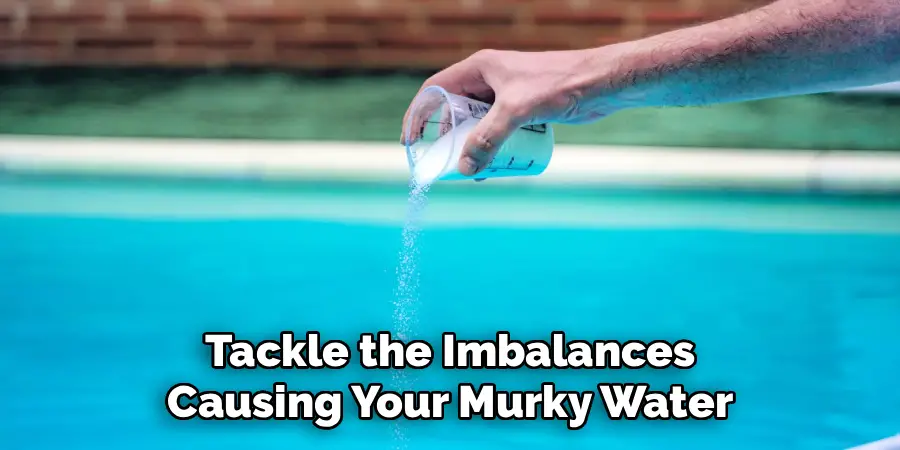
Your pool filter acts as the kidneys of your swimming pool, pulling out the particles that cause cloudiness. If your filter is dirty or clogged, the baking soda will not be able to clear the water effectively. Take the time to backwash your sand or diatomaceous earth (DE) filter. If you have a cartridge filter, remove the cartridge and hose it down thoroughly to remove trapped dirt, oils, and organic matter. Starting with a freshly cleaned filter maximizes water flow and circulation, giving the baking soda the best possible environment to distribute evenly and tackle the imbalances causing your murky water.
Step 6: Thoroughly Brush the Pool Walls and Floor
Algae and microscopic debris love to cling to the sides and bottom of your pool, contributing heavily to a cloudy appearance. Before adding your treatment, attach your heavy-duty brush to your telescopic pole and give the entire pool a vigorous scrubbing. Pay special attention to the corners, the steps, and the waterline, as these areas experience poor circulation and harbor stubborn contaminants. Brushing forces all these clinging particles into the open water where the filter can grab them. This physical agitation is a vital step in breaking down the barriers that keep your water looking dull and dirty.
Step 7: Disperse the Baking Soda into the Water
Now it is time to actually add the baking soda to your pool. Never dump the entire amount into one single spot, as it will pile up on the bottom and take days to dissolve. Instead, measure out your calculated amount. Walk slowly around the perimeter of your pool, broadcasting the powder evenly over the surface of the water. If it is a windy day, pour it closer to the water’s surface to prevent it from blowing away. Alternatively, you can dissolve the powder in a bucket of pool water first and pour the liquid mixture evenly around the deep end for faster integration.
Step 8: Run the Pool Pump and Circulate the Water
Baking soda cannot do its job if it just sits in the water. It needs vigorous circulation to mix properly and adjust the overall alkalinity. Turn on your pool pump and let it run continuously. The moving water pulls the baking soda through the system, distributing it evenly across every gallon of water. Keep your pump running for at least 6 to 8 hours, though running it for a full 24 hours provides the absolute best results for clearing cloudy water. Do not allow anyone to swim during this circulation period, as the shifting chemistry needs time to settle and do its work.
Step 9: Retest the Water After 24 Hours Have Passed
Patience plays a huge role in pool maintenance. Wait a full 24 hours after adding the baking soda before you test the water again. This waiting period ensures the chemical has fully dissolved and integrated into the water supply. Take a water sample from about elbow-depth, away from the return jets. Use your test kit to check the total alkalinity and pH levels once more. You should see a marked improvement in the numbers, with alkalinity sitting squarely in the 80 to 120 ppm range. You should also notice that the water looks noticeably clearer and less milky.
Step 10: Repeat the Process if the Water Requires It
Sometimes, a pool sits so far out of balance that a single treatment will not entirely clear the cloudiness. If your test results show that the alkalinity remains below 80 ppm after 24 hours, you need to repeat the process. Calculate the new deficit and add another round of baking soda using the exact same steps. Make sure to brush the pool again and run the pump continuously. Keep making small adjustments and wait 24 hours between each application. Small, incremental additions prevent you from overcorrecting and pushing the alkalinity too high, ensuring you achieve that perfect, crystal-clear water safely.
Frequently Asked Questions
- Can I Use Baking Powder Instead of Baking Soda?
No, you can never substitute baking powder for baking soda when treating a pool. Baking soda consists entirely of sodium bicarbonate, which safely raises alkalinity. Baking powder includes added acids and cornstarch designed for baking purposes. Adding these extra ingredients to your pool water will severely disrupt your chemistry. It will actually make your cloudy water situation significantly worse. - How Fast Will Baking Soda Clear My Pool?
You should start seeing a noticeable improvement in water clarity within 24 hours of application. The exact timeline depends heavily on your pump’s circulation power and how dirty your filter is. If your alkalinity was extremely low, it might take a couple of days and a second application. Running your pump continuously during this time speeds up the clearing process. Always wait a full day before retesting to gauge your progress accurately. - Will Baking Soda Raise My Pool’s pH Level Too High?
Baking soda primarily targets and raises your total alkalinity, acting as a stabilizer for your pool water. It has a very mild effect on your pH, nudging it up slightly but rarely pushing it to dangerous levels. Its main function is to prevent your pH from fluctuating wildly. However, if you add an excessive amount all at once, you can throw the balance off. This is why you must calculate your doses carefully based on your pool volume.

Conclusion
How to clear a cloudy pool with baking soda does not require expensive treatments or a degree in advanced chemistry.
By understanding how your total alkalinity affects water clarity, you can solve the problem using simple, affordable baking soda. When you follow the steps outlined in this guide—testing accurately, calculating your volume, and allowing proper circulation—you take full control over your pool’s health. You will save money, protect your pool equipment, and create a safer swimming environment.
Keep a bulk bag of baking soda in your maintenance shed, and you will always be ready to keep your water sparkling, clear, and perfectly balanced.

About
Outdoor Fixes is a distinguished figure in the world of Diy design, with a decade of expertise creating innovative and sustainable Diy solutions.
His professional focus lies in merging traditional craftsmanship with modern manufacturing techniques,
fostering designs that are both practical and environmentally conscious. As the author of diy,
outdoorfixes delves into the art and science of outdoorfixes-making, inspiring artisans and industry professionals alike.
Education RMIT University
(Melbourne, Australia) Associate Degree in Design (Outdoor Fixes) Focus on sustainable design, industry-driven projects,
and practical craftsmanship. Gained hands-on experience with traditional and digital manufacturing tools, such as CAD and CNC software.
Nottingham Trent University
(United Kingdom) Bachelor’s in outdoorfixes.com and Product Design (Honors) Specialized in product design with a focus on blending creativity with production
techniques. Participated in industry projects, working with companies like John Lewis and Vitsoe to gain real-world insights.
Publications and Impact
In diy, Outdoor Fixes his insights on indoor design processes, materials, and strategies for efficient production.
His writing bridges the gap between artisan knowledge and modern industry needs, making it a must-read for both budding designers and seasoned professionals.