
If you want fewer cobwebs on your porch long term, start with a full cleanup. Remove the webs that are already there, vacuum or sweep up egg sacs, then make the area less appealing to spiders in the first place. A peppermint oil spray may help in some cases, and switching to yellow bug lights can reduce the insects that tend to draw spiders in at night.
Few things make a front entry feel neglected faster than walking straight into a web. It is unpleasant, a little startling, and often a sign that the porch has become an easy hunting spot for spiders. That part matters. In most cases, the webs are not the real problem on their own; they are a symptom of a space that offers shelter, darkness, and a steady supply of insects.
So the goal is not just to knock down silk every few days and hope for the best. What usually works better is a mix of cleaning, small environmental changes, and steady upkeep. None of this is especially complicated. Still, it does require some consistency, because porches naturally give spiders exactly the kind of corners and overhangs they seem to prefer. In this guide on how to keep cobwebs off porch, we’ll outline some simple steps you can take to prevent spider webs from forming on your porch.
Understand Why Cobwebs Form
Spiders do not choose porch ceilings at random. The location often gives them a protected place to anchor a web, stay out of heavy rain, and wait for prey. If your porch has light fixtures near the door, that effect may be even stronger. Evening lights tend to attract moths, flies, mosquitoes, and other insects. Spiders, unsurprisingly, follow the food source.
It also helps to separate webs from cobwebs, since people often use the terms interchangeably. A cobweb is usually an older, abandoned web that has started collecting dust, pollen, and bits of debris. Once a spider moves on, the silk stays put. On a porch, wind and outdoor dirt make those leftover webs show up quickly. That is why a space can look dirty even if only a few spiders are actually active there. In practice, keeping cobwebs away usually means making the porch less attractive to spiders before they settle in.
7 Simple Step-By-Step Guidelines On How to Keep Cobwebs Off Porch
Step 1: Thoroughly Sweep And Clean The Porch Area
Begin with the obvious part: remove what is already there. Use a long-handled broom, a cobweb duster, or a vacuum with an extension wand to reach high corners, beams, light fixtures, and the seam where the wall meets the ceiling. Those are the places spiders seem to favor, partly because they are undisturbed and partly because they provide good anchor points.
Try not to stop at just knocking the webs loose. That is where many people cut corners, and it tends to show. If egg sacs or debris are left behind, the problem can return quickly. Sweep everything off the porch or vacuum it up completely. If you are going to use any repellent or seal gaps later, a clean surface gives you a much better starting point.
Step 2: Apply A Natural Peppermint Oil Repellent
Natural repellents are not magic, and it is worth saying that plainly. They may help discourage spiders, but they usually work best as part of a routine rather than as a one-time fix. Peppermint oil is one of the more common options people use. Some also try eucalyptus or tea tree oil, though peppermint is probably the best known.

To make a simple spray, mix about fifteen to twenty drops of peppermint essential oil with water and a small amount of dish soap in a spray bottle. The soap helps disperse the oil and may help the mixture cling to surfaces a bit longer. Spray around door frames, window trim, ceiling corners, and small cracks where spiders might hide or pass through. You will likely need to reapply it regularly, especially after heavy rain or extended humidity, since the scent does not last forever outdoors.
Step 3: Switch To Yellow Bug Lights For Your Porch
This step often gets overlooked, though it may be one of the more practical ones. Spiders are on your porch for a reason, and that reason is often insects. Standard outdoor bulbs can draw in flying bugs at night, which turns your entryway into a feeding zone.
Yellow or amber bug lights are designed to be less attractive to many insects than standard bulbs. Results may vary depending on the area and the kinds of bugs you get, but the logic is fairly straightforward: fewer insects often means less reason for spiders to stay. You still get light for the porch, just without making the space quite so inviting to every moth in the neighborhood. It is a small change, but often a sensible one.
Step 4: Seal Cracks And Crevices Around The Porch
Spiders rarely spend all day sitting in the middle of a visible web. Many hide in quiet, narrow spaces and come out later. That means gaps in siding, cracks in masonry, loose trim, or openings around doors and windows can give them easy cover.
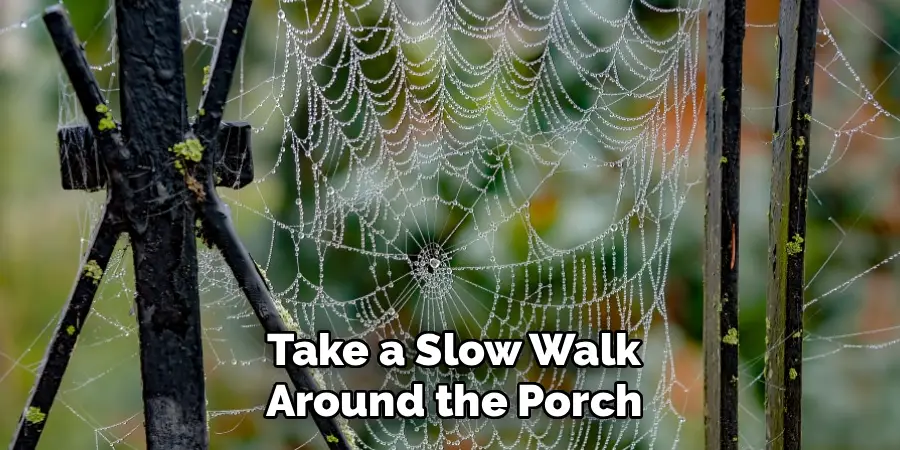
Take a slow walk around the porch in daylight and look closely at the details. Small gaps near the foundation, joints in the ceiling, and spaces around frames are worth checking. Then seal what you can with an exterior-grade caulk made for weather exposure. This will not eliminate every possible hiding place, of course, but it can reduce the number of sheltered spots close to the porch itself. That, in turn, may make the area less convenient for spiders to occupy.
Step 5: Remove Potted Plants And Debris From The Perimeter
Porch decor can unintentionally create shelter. Potted plants, stacked wood, unused furniture, and dense shrubs close to the house all provide shade, moisture, and cover. Spiders are not the only creatures that like those conditions; insects do too. Once that happens, the porch becomes part of a larger little ecosystem, and not one that most homeowners are aiming for.
You do not need to strip the area bare. But it helps to create some breathing room around the porch. Move plants away from the immediate edge of the house where possible. Keep firewood stored well away from entry points. Trim back branches and shrubs that touch the structure. The less direct contact there is between vegetation and your porch, the fewer pathways spiders may have to climb upward toward eaves, lights, and ceiling corners.
Step 6: Spray A Commercial Spider Deterrent Monthly
If the spider activity is heavy, natural options may not do enough on their own. That is usually when people consider a commercial perimeter spray. These products vary, so the label matters. Look for one intended for exterior use around foundations, entry points, and eaves.
Use it carefully. Read the instructions, pay attention to where it can be applied, and avoid overusing it just because more sounds better. In some conditions, these products may remain effective for weeks or even longer, though rain and direct sun can shorten that window. If your porch is especially exposed to the elements, more frequent reapplication may be needed. If not, the schedule on the product label is the safer guide. Chemical deterrents can be useful, but they tend to work best when the cleaning and habitat-reduction steps are already in place.
Step 7: Power Wash The Porch Exterior Regularly
A broom handles a lot, but not everything. Old silk, dust, insect residue, and grime can cling to porch surfaces more stubbornly than they first appear. A periodic power wash may help remove that buildup and make it harder for webs to accumulate unnoticed.

Twice a year is often a reasonable schedule for a deeper clean, especially in spring and fall. Use a lower-pressure setting if your porch has painted wood, aging trim, or siding that could be damaged. In some cases, a mild exterior cleaning solution can help loosen dirt without requiring aggressive pressure. It is not that power washing alone keeps spiders away. It does not. What it does do is reset the surface and make the rest of your maintenance efforts more effective.
Following these steps on how to keep cobwebs off porch will not only improve the appearance of your porch, but it will also help to reduce the presence of spiders. However, there are a few additional tips and tricks that can further enhance your efforts.
Firstly, consider using natural deterrents such as peppermint oil or vinegar-based solutions when cleaning your porch.
Common Mistakes to Avoid
One of the most common mistakes is treating the web as the whole problem. People sweep them down, the porch looks better for a day or two, and then the spiders return because nothing else changed. Another issue is lighting. Leaving bright porch lights on all night can keep drawing insects in, which quietly supports the same cycle.
There is also the matter of follow-through. Natural sprays wear off. Rain washes them away. Cracks reopen over time. Even a good prevention plan falls apart if it is done once and forgotten. That may sound obvious, but it is probably the difference between a porch that stays mostly clear and one that needs constant rescue.
Long-Term Porch Maintenance Tips
What seems to help most is a routine that is simple enough to keep. Spend a few minutes each week checking upper corners, light fixtures, and trim. Brush down any new webs before they have time to collect dust and become noticeable cobwebs. That small habit can interrupt the pattern before it gets established.
Beyond that, keep nearby gutters clear so water does not collect around the house and create damp conditions that attract pests. Mow or trim the area near the porch, so insects have fewer places to gather right next to the structure. If plants are part of the look you want, that is fine; just avoid packing them tightly against the house. A porch does not have to be sterile to stay presentable. It just needs to be slightly less convenient for spiders than the alternatives nearby.

Frequently Asked Questions
Q1: What Is The Best Natural Spray To Keep Spiders Away?
A1: Peppermint oil is one of the most commonly recommended natural options. A typical homemade mix uses about fifteen drops of peppermint essential oil, one cup of water, and a few drops of dish soap in a spray bottle. It may help discourage spiders in some areas, though it usually needs to be reapplied often to stay useful outdoors.
Q2: Why Do I Have So Many Cobwebs On My Porch Suddenly?
A2: A sudden increase in cobwebs often points to more insect activity around the porch. Warm weather, humidity, or a change in outdoor lighting may attract more flying insects at night. When that happens, spiders may move in quickly because the food source is right there. The webs are often a visible sign of that larger shift.
Q3: How Often Should I Clean My Porch To Prevent Cobwebs?
A3: During warmer months, a quick weekly sweep is usually a good baseline. Focus on corners, ceilings, light fixtures, and trim. Removing fresh webs early can disrupt spider activity before abandoned webs start collecting dust and turning into obvious cobwebs. If your porch gets heavy insect traffic, you may need to check it more often.
Creating a Welcoming, Pest-Free Entryway
Keeping a porch clear of cobwebs is less about one perfect trick and more about changing the conditions that let webs keep coming back. Clean thoroughly. Reduce insect activity where you can. Seal the gaps that make good hiding spots. Then repeat the small maintenance steps often enough that spiders do not get comfortable.
That may not sound glamorous, but it is realistic. And for most homes, realistic works better than dramatic promises of a permanent fix. If you start with a full cleanup and make one or two practical changes this week, your porch should begin to feel more inviting—and much less like a place spiders have quietly claimed as their own. Thanks for reading this guide on how to keep cobwebs off porch.

About
Outdoor Fixes is a distinguished figure in the world of Diy design, with a decade of expertise creating innovative and sustainable Diy solutions.
His professional focus lies in merging traditional craftsmanship with modern manufacturing techniques,
fostering designs that are both practical and environmentally conscious. As the author of diy,
outdoorfixes delves into the art and science of outdoorfixes-making, inspiring artisans and industry professionals alike.
Education RMIT University
(Melbourne, Australia) Associate Degree in Design (Outdoor Fixes) Focus on sustainable design, industry-driven projects,
and practical craftsmanship. Gained hands-on experience with traditional and digital manufacturing tools, such as CAD and CNC software.
Nottingham Trent University
(United Kingdom) Bachelor’s in outdoorfixes.com and Product Design (Honors) Specialized in product design with a focus on blending creativity with production
techniques. Participated in industry projects, working with companies like John Lewis and Vitsoe to gain real-world insights.
Publications and Impact
In diy, Outdoor Fixes his insights on indoor design processes, materials, and strategies for efficient production.
His writing bridges the gap between artisan knowledge and modern industry needs, making it a must-read for both budding designers and seasoned professionals.