
Old gas sitting inside your lawn mower can cause more trouble than you might expect. Fuel breaks down over time, leaving behind sticky residue that clogs the carburetor and fuel lines. If you’ve ever pulled the starter cord dozens of times only to hear nothing but a tired sputter, stale gas is often the culprit.
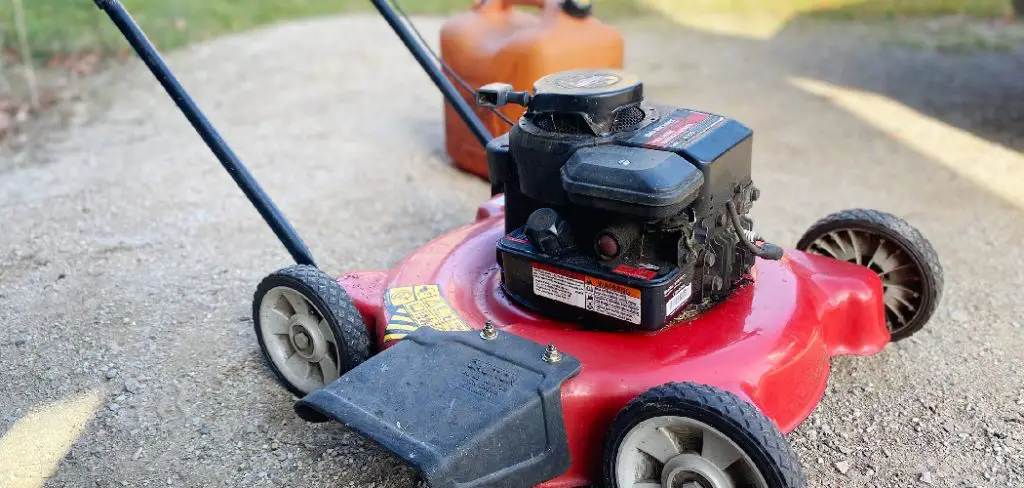
Emptying the gas from your lawn mower is one of the simplest ways to keep it running smoothly for years. Whether you’re storing it for winter, getting ready for a repair, or just clearing out fuel that’s been sitting too long, knowing how to drain the tank properly saves you money and headaches.
This guide on how to empty lawn mower gas covers everything you need to know. Let’s get started.
What are the Benefits?
Draining the gas from your lawn mower might feel like an extra chore, but the payoff is worth it. Here are the biggest reasons to make it part of your routine.
- Prevents engine damage. Gasoline starts to degrade in as little as 30 days. As it breaks down, it forms gum and varnish that gum up the carburetor, fuel lines, and jets. Removing old fuel stops these deposits before they form.
- Makes starting easier. Fresh fuel ignites cleanly. Stale gas struggles to combust, which leads to hard starts, rough idling, and stalling. An empty tank means you start each season with a clean slate.
- Protects against corrosion. Many fuels today contain ethanol, which attracts moisture. Water inside the tank causes rust and corrosion over time. Draining the gas before storage keeps these problems away.
- Saves money on repairs. A clogged carburetor can cost a good chunk to clean or replace. Spending a few minutes draining the tank now helps you avoid bigger repair bills later.
- Improves safety. Storing a mower with a full tank of gas creates a fire risk, especially in a hot garage or shed. An empty tank is far safer to keep around.
- Extends the mower’s lifespan. A well-maintained engine lasts longer. Regular gas removal is a small habit that adds years to your machine.
What Will You Need?
Before you begin, gather these supplies. Having everything ready makes the job faster and cleaner.
- Safety gloves to protect your hands from fuel
- Safety glasses to shield your eyes from splashes
- A clean, approved gas container with a tight-sealing lid
- A manual or siphon pump to pull fuel out of the tank
- A turkey baster or syringe for removing small amounts
- A funnel to avoid spills when transferring fuel
- Clean rags or paper towels for wiping up drips
- A wrench or socket set in case you need to remove the fuel line
- A drain pan or bucket to catch fuel
- A fire extinguisher nearby, just in case
- Your mower’s owner’s manual for model-specific guidance
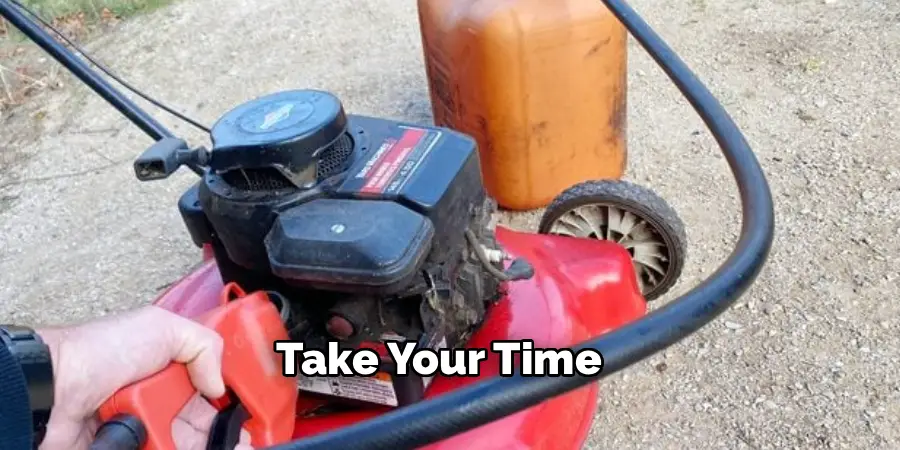
Work in a well-ventilated area, ideally outdoors. Keep all sparks, flames, and cigarettes far away from your workspace.
10 Easy Steps on How to Empty Lawn Mower Gas
Step 1: Choose a Safe Location
Start by picking the right spot. Gasoline gives off flammable vapors, so you need plenty of fresh air. Move your mower outdoors onto a flat, stable surface like a driveway or patio. Avoid working in a closed garage where fumes can build up. Make sure there are no open flames, pilot lights, or sources of sparks nearby. Keep children and pets away from the area. Set your fire extinguisher within easy reach. A safe, organized workspace lowers your risk and makes the whole job go more smoothly from the very beginning.
Step 2: Let the Engine Cool Down
If you’ve used the mower recently, give it time to cool. A hot engine combined with gasoline is a dangerous mix. Wait at least 30 minutes after the last use before you start draining. Touch the engine casing gently to confirm it’s no longer warm. Cooling also lets any fuel that splashed during mowing settle, reducing the chance of a flare-up. This step costs you nothing but a little patience, and it keeps you safe. Never rush this part, even if you’re short on time.
Step 3: Put on Your Safety Gear
Before touching any fuel, protect yourself. Slip on your safety gloves to keep gasoline off your skin, since fuel can irritate or dry it out. Put on safety glasses to guard your eyes from splashes. If you’re sensitive to fumes, consider a basic mask. Wearing the right gear means you can focus on the task without worrying about accidental contact. It only takes a moment, and it makes a real difference in keeping the job safe and comfortable.
Step 4: Disconnect the Spark Plug
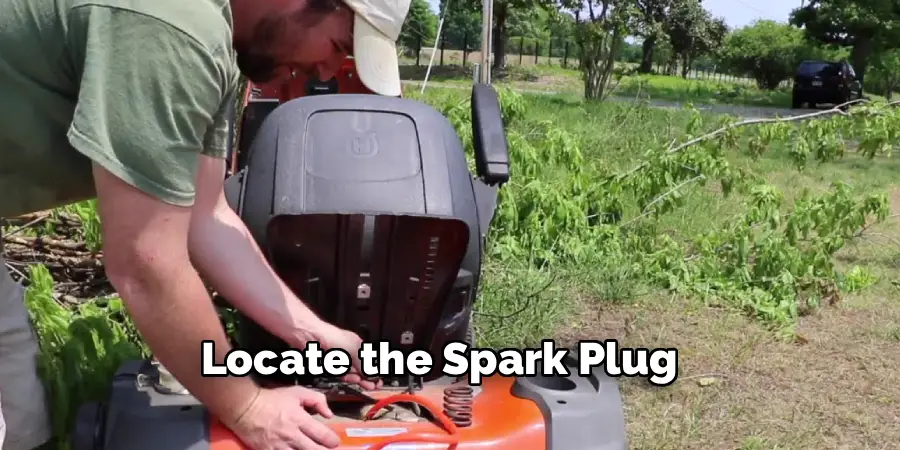
This is a key safety move. Locate the spark plug, usually found at the front or side of the engine with a thick rubber wire attached. Gently pull the wire off the spark plug. This prevents the engine from starting by accident while you work. An unexpected start with fuel exposed could cause injury or fire. Tuck the wire away from the plug so it doesn’t slip back on. Never skip this step, even if the engine is off. It’s a simple action that protects you the entire time.
Step 5: Prepare Your Gas Container
Set up a clean, government-approved gas container nearby. Make sure it’s the right size to hold all the fuel from your tank. Place a funnel in the opening to catch fuel cleanly during the transfer. Position the container at a lower level than the mower if you plan to use a siphon, since gravity helps the fuel flow. Lay down some rags around the base to soak up any drips. Having your container ready before you start draining means you won’t fumble with supplies while fuel is flowing.
Step 6: Use a Siphon Pump to Remove the Gas
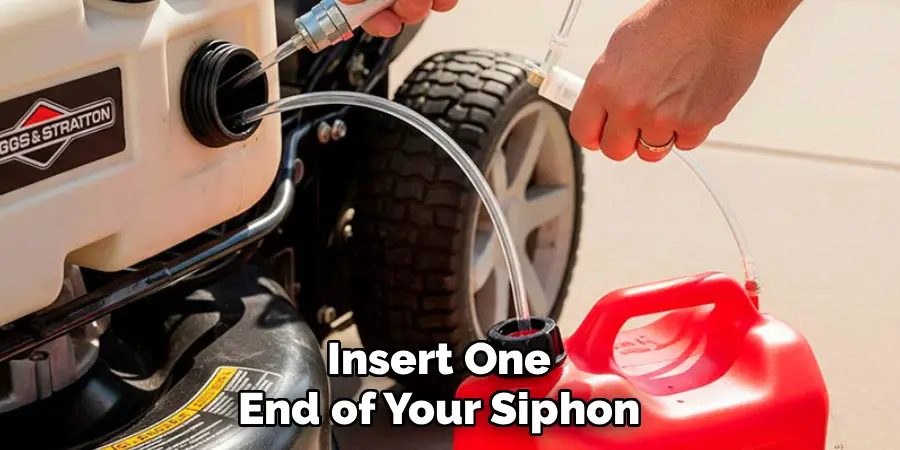
Now for the main event. Insert one end of your siphon or manual pump into the fuel tank, pushing it down until it reaches the bottom. Place the other end into your gas container. Start pumping according to your siphon’s instructions. The fuel will begin flowing from the tank into the container. Keep the hose steady and watch the flow. Continue pumping until the tank is nearly empty. A manual hand pump gives you the most control and avoids the need to suck on a hose, which is never safe with gasoline.
Step 7: Remove the Last Bit of Fuel
Siphons can’t always reach every drop. To get the remaining fuel, use a turkey baster or a syringe. Lower it into the tank and draw up the leftover gas, then squeeze it into your container. You may need to tilt the mower slightly to pool the fuel in one corner, but check your manual first, since tilting the wrong way can flood the engine with oil. Take your time here. Removing every last bit of gas protects against residue and corrosion during storage. Wipe up any spills as you go.
Step 8: Drain the Carburetor
For a thorough job, drain the carburetor too. Some carburetors have a small drain screw or bolt at the bottom of the float bowl. Place your drain pan underneath, then loosen the screw with a wrench to let the trapped fuel run out. If your mower has a fuel shut-off valve, close it first. Once the fuel stops flowing, tighten the screw back up. Draining the carburetor clears out fuel that could otherwise harden and clog the tiny passages inside. This extra step keeps your mower starting easily next season.
Step 9: Wipe Down and Clean Up
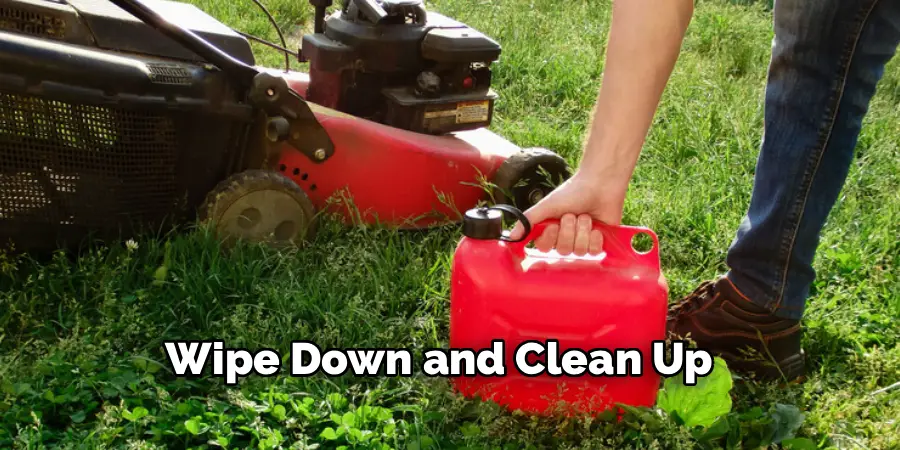
With the fuel removed, clean your work area. Use rags or paper towels to wipe up any drips on the mower, the ground, and your tools. Seal the gas container tightly to prevent vapors from escaping. Set used rags out to dry in open air before disposing of them, since fuel-soaked rags can be a fire hazard if bunched up. A clean workspace not only looks better but also lowers the risk of accidents. Take a moment to inspect the mower for any leftover fuel you might have missed.
Step 10: Reconnect and Store Properly
Finally, push the spark plug wire back onto the spark plug so the mower is ready for next use. If you’re storing the mower, keep it in a dry, ventilated spot away from heat sources. Store your sealed gas container somewhere safe and cool, and use the fuel within a month or treat it with a stabilizer if you plan to keep it longer. Properly storing both the mower and the fuel wraps up the job and sets you up for an easy start when mowing season returns.
Conclusion
How to empty lawn mower gas is a small task that delivers big rewards. By removing old fuel, you protect your engine from clogs and corrosion, make starting easier, and add years to your machine’s life. You also keep your home safer by cutting down on fire risks during storage.
The process is straightforward once you break it into steps. Choose a safe outdoor spot, let the engine cool, gear up, and disconnect the spark plug before you touch any fuel. Then siphon out the gas, clear the last bits with a baster, drain the carburetor, and clean up thoroughly. Reconnect everything and store both the mower and the fuel properly when you’re done.
With this guide in hand, you have everything you need to drain your lawn mower’s gas with confidence. Now you’re ready to keep your lawn looking great season after season.

About
Outdoor Fixes is a distinguished figure in the world of Diy design, with a decade of expertise creating innovative and sustainable Diy solutions.
His professional focus lies in merging traditional craftsmanship with modern manufacturing techniques,
fostering designs that are both practical and environmentally conscious. As the author of diy,
outdoorfixes delves into the art and science of outdoorfixes-making, inspiring artisans and industry professionals alike.
Education RMIT University
(Melbourne, Australia) Associate Degree in Design (Outdoor Fixes) Focus on sustainable design, industry-driven projects,
and practical craftsmanship. Gained hands-on experience with traditional and digital manufacturing tools, such as CAD and CNC software.
Nottingham Trent University
(United Kingdom) Bachelor’s in outdoorfixes.com and Product Design (Honors) Specialized in product design with a focus on blending creativity with production
techniques. Participated in industry projects, working with companies like John Lewis and Vitsoe to gain real-world insights.
Publications and Impact
In diy, Outdoor Fixes his insights on indoor design processes, materials, and strategies for efficient production.
His writing bridges the gap between artisan knowledge and modern industry needs, making it a must-read for both budding designers and seasoned professionals.